

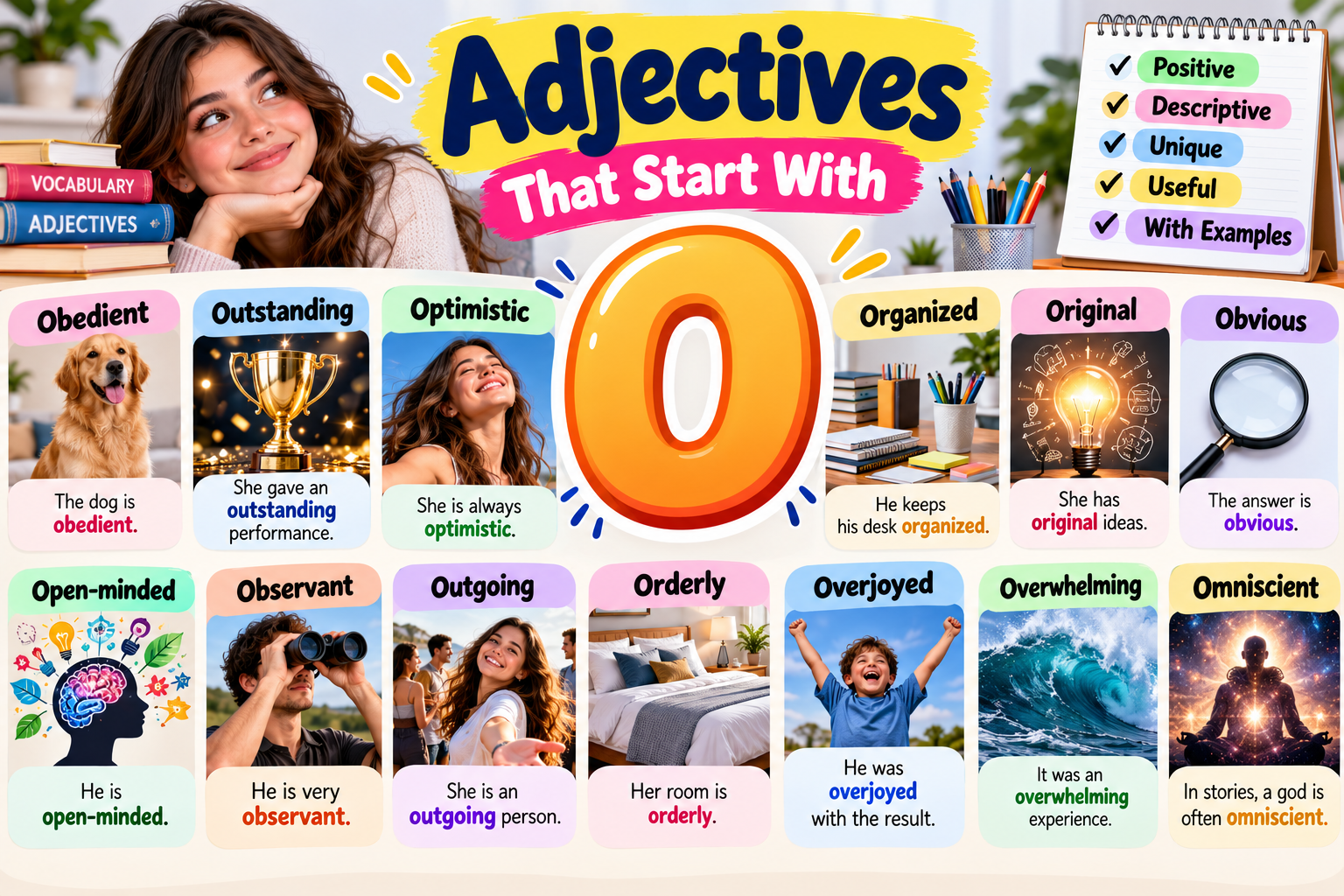
Adjectives that start with O are descriptive words—such as outstanding, optimistic, original, and outlandish—used to modify nouns and express qualities ranging from positive personality traits to physical states. This curated vocabulary list categorized by sentiment, context, and character traits helps students, writers, and marketers select the precise O-adjective to elevate their writing.
Mastering adjectives starting with the letter O adds variety, emotional depth, and precision to your vocabulary. Whether you are drafting a resume, writing creative fiction, crafting social media captions, or looking for high-impact vocabulary words, knowing which word to choose makes all the difference.
Here is your comprehensive guide to the top adjectives starting with O, organized for instant reference, modern communication, and real-world application.
What Do Adjectives That Start With O Mean in Text & Chat?
In digital communication, group chats, and social media captions, adjectives that start with O set the tone, attitude, and vibe of a message.
- Positive O-Adjectives (Optimistic, Outstanding, Outgoing): Used to compliment friends, celebrate achievements, or project a confident, energetic tone online.
- Informal & Slang O-Adjectives (Outrageous, Over-the-top, Out there): Used to describe wild behavior, shocking news, dramatic outfits, or internet drama.
- Formal & Professional O-Adjectives (Objective, Operational, Optimal): Used in emails, Slack channels, and performance reviews to maintain clarity and authority.
Here’s what most people miss: choosing a specific adjective like opulent over a generic word like nice or fancy instantly elevates the perceived quality of your content.
How Tone Shifts: What O-Adjectives Signal From a Guy vs. a Girl
While word definitions remain constant, the conversational sub-intent behind using descriptive O-adjectives often shifts depending on who is sending the message and the platform used:
In Casual Messaging & Dating Contexts
- Describing someone as “Outgoing” (From a Guy): Usually signals he admires her sociability, charm, and easy-going energy in group settings.
- Describing an event as “Over-the-top” (From a Girl): Often used playfully or sarcastically to call out extra drama, extravagant plans, or excessive effort.
In Work & Professional Settings
- Calling work “Outstanding”: Serves as top-tier praise during quarterly reviews or project wrap-ups.
- Calling analysis “Objective”: Highlights neutral, data-driven thinking free from emotional bias.
Quick Reference Table: Top Adjectives Starting With O
| Adjective | Primary Meaning | Short Definition | Tone | Best Suitable For | Not Suitable For |
| Optimistic | Hopeful and confident about the future | Positive outlook | Encouraging | Cover letters, pep talks | Mourning, serious failures |
| Outstanding | Exceptionally good or distinguished | Superior quality | Praiseworthy | Reviews, recommendations | Mediocre efforts |
| Objective | Unbiased and based on real facts | Neutral/Fair | Professional | Reports, debates | Emotional personal essays |
| Obsolete | No longer produced or used; out of date | Outdated | Critical | Tech reviews, strategy | Modern innovations |
| Opulent | Ostentatiously rich and luxurious | Lavish | Impressive | Travel, fashion, luxury | Budget-friendly items |
| Outrageous | Shockingly bad or excessively bold | Wild/Extreme | Expressive | Slang, reaction posts | Formal legal documents |
Popular Categories of Adjectives Starting With O
To help you find the exact word you need fast, here is a categorized breakdown of the most useful O-adjectives:
1. Positive Adjectives That Start With O
- Optimistic: Seeing the bright side of things.
- Outgoing: Friendly, socially confident, and open.
- Original: Creative, unique, and fresh.
- Open-minded: Receptive to new ideas and perspectives.
- Optimal: Most desirable or satisfactory; best possible.
- Overjoyed: Extremely happy and delighted.
- Organized: Structured, neat, and systematic.
2. Negative Adjectives That Start With O
- Obnoxious: Extremely unpleasant or offensive.
- Obstinate: Stubborn and refusing to change one’s opinion.
- Overbearing: Arrogant, domineering, and pushy.
- Obsolete: Outdated and no longer useful.
- Outrageous: Offensively bold or unreasonably high.
- Ominous: Giving the impression that something bad is about to happen.
3. Descriptive & Physical O-Adjectives
- Oval: Egg-shaped or elliptical.
- Opaque: Not able to be seen through; not transparent.
- Overcast: Covered with clouds; dull and gray.
- Ornate: Elaborately or highly decorated.
- Organic: Natural; derived from living matter.
Origin, History & Vocabulary Evolution
Many adjectives starting with the letter O trace their roots directly back to Latin and Old French prefixes:
- The Latin Prefix Ob-: Meaning “toward,” “against,” or “in the way of,” giving birth to words like obstacle, obstinate, and obvious.
- The Latin Prefix Omni-: Meaning “all” or “every,” producing literary and theological terms like omnipotent (all-powerful), omniscient (all-knowing), and omnipresent (present everywhere).
- Modern Digital Evolution: In internet culture, compound descriptors like over-the-top (OTT) and off-key evolved from physical descriptions into widely used digital slang for social commentary.
Usage Across Social Media Platforms
Here is how descriptive O-adjectives are styled and used across modern apps:
1. Instagram & TikTok
- “Obsessed with this opulent sunset view 🌅”
- “An outlandish outfit transformation! #FashionTok”
2. LinkedIn & Professional Email
- “Thank you for an outstanding performance this quarter.”
- “We are seeking an organized and objective team leader.”
3. WhatsApp & Text Chats
- “That party was completely over-the-top haha!”
- “Feeling super optimistic about tomorrow’s results.”
Real Chat Examples & Real-World Scenarios
Here is how these adjectives function naturally in conversation:
Scenario 1: Complimenting a Friend
Friend A: How did your interview go today?
Friend B: It went great! The manager was super open-minded and loved my original portfolio ideas.
Scenario 2: Discussing a Drama or Event
Friend A: Did you see what happened in the group chat?
Friend B: Yes! His reaction was totally outrageous for no reason.
Common Mistakes & Words to Avoid Misusing
Here’s what most people miss when using adjectives starting with O:
1. Confusing Objective and Subjective
- Objective: Based on facts and measurable evidence (“An objective summary”).
- Subjective: Based on personal feelings, tastes, or opinions (“A subjective review”).
2. Overusing Generic Descriptors
Instead of overusing words like okay or old, swap them for higher-impact adjectives like optimal, established, or obsolete depending on the scenario.
Cleaner Substitutes & High-Impact Synonyms
If you want to vary your word choice, consider these elevated alternatives:
- Instead of “Nice”: Use Obliging or Organized.
- Instead of “Rich”: Use Opulent or Affluent.
- Instead of “Strange”: Use Outlandish or Odd.
- Instead of “Best”: Use Optimal or Outstanding.
How to Respond When Someone Uses These Adjectives
Match your reply to the tone of the adjective used:
- If someone calls your work “Outstanding”:
- Reply: “Thank you so much! I really appreciate the feedback.”
- If someone calls a situation “Obnoxious”:
- Reply: “I totally agree, that was completely out of line.”
Are O-Adjectives Still Popular in Search & Writing?
Yes. Descriptive word lists targeting specific letters—especially adjectives starting with O—remain high-volume search queries for students, educators, copywriters, and job seekers worldwide. Words like optimistic, organic, and objective continue to rank among the most frequently searched vocabulary words in modern English usage.
The 1-Rule Golden Takeaway
Choose an O-adjective that matches your exact intent: use words like optimistic and outstanding for praise, and objective or optimal for clear, professional authority.
