

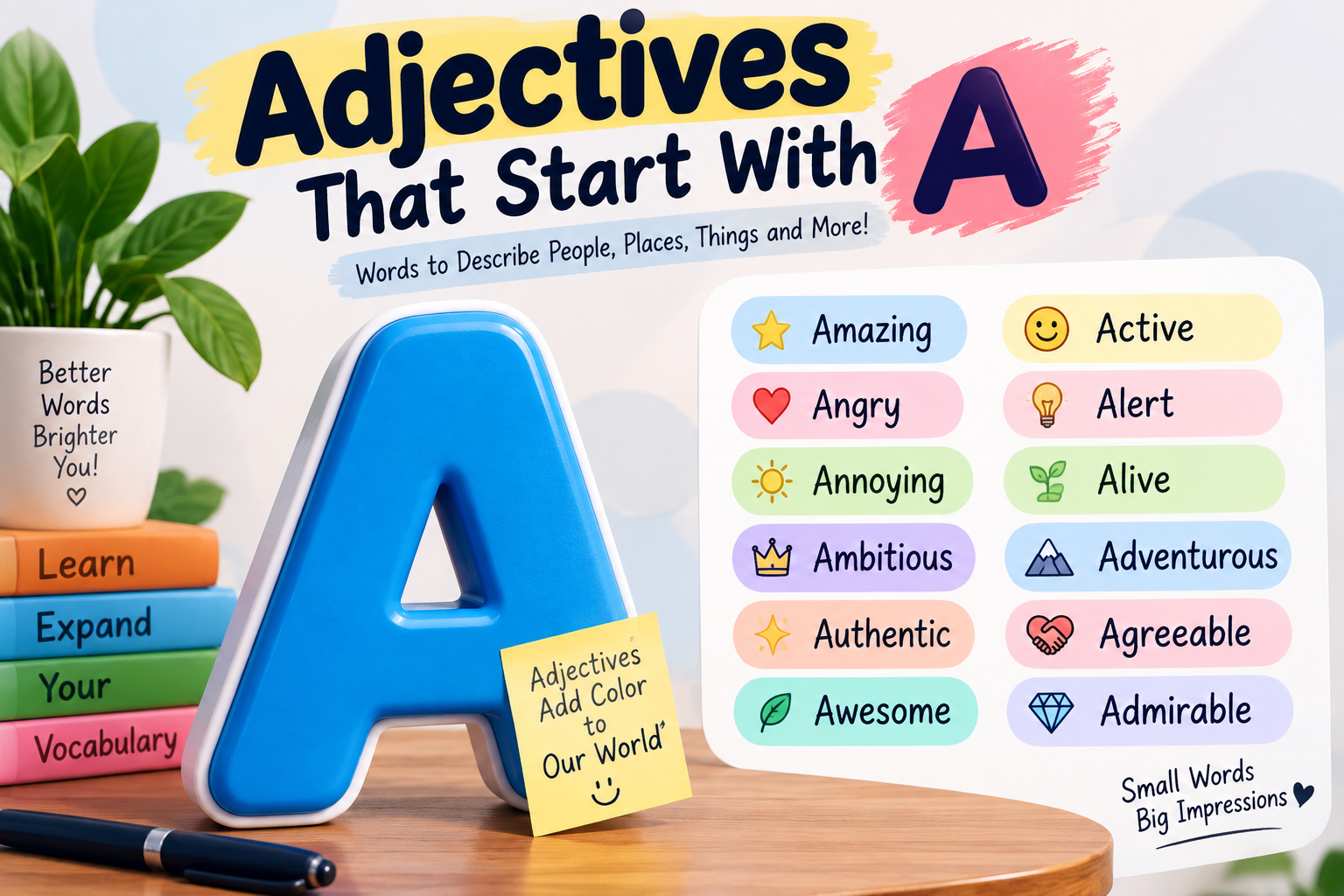
Adjectives starting with the letter A are words used to describe, modify, or give extra detail about a noun, ranging from positive traits like adaptable and authentic to expressive descriptions like ardent or audacious. Mastering these adjectives sharpens your writing, boosts vocabulary for tests like the SAT/GRE, and elevates everyday conversations across social media and work settings.
What Do “A” Adjectives Mean in Text & Chat?
In digital communication, “A” adjectives serve as low-effort, high-impact modifiers. Rather than typing a full sentence, dropping a descriptive word like ambiturner, aesthetic, or authentic instantly sets the tone.
In text chats, using sharp adjectives conveys specific energy:
- Positive energy: Words like awesome, astounding, or admirable signal strong approval.
- Sarcastic or critical tone: Words like absurd, awkward, or aloof shut down a conversation quickly.
- Vibe check: Terms like aesthetic function as complete social evaluations of photos, outfits, or profiles.
What Does an “A” Adjective Mean From a Guy vs. a Girl?
Context and gender dynamics heavily influence how descriptive words land in direct messages (DMs) and group chats.
- From a Guy: Guys often use high-value “A” adjectives like adorable, amazing, or attractive as direct compliments. If a guy texts “You look aesthetic,” he is admiring your style or vibe. If he calls an idea absurd, he is usually being blunt or playful rather than deeply critical.
- From a Girl: Girls tend to use “A” adjectives like authentic, adorable, or articulate with nuanced emotional depth. Calling someone authentic is a top-tier compliment regarding trustworthiness. Conversely, describing someone as aloof or apathetic often carries a subtle warning about their lack of emotional effort.
Quick Reference Table: Popular “A” Adjectives
| Adjective | Primary Meaning | Short Meaning | Common Tone | Suitable For | Not Suitable For |
| Authentic | Genuine, real, original | True to self | Admiring / Respectful | Personal compliments, reviews | Insults, formal complaints |
| Aesthetic | Visually pleasing, stylish | Artistic vibe | Casual / Trendy | Social media captions, design | Standard technical specs |
| Aloof | Cool and distant, detached | Unapproachable | Critical / Observant | Describing behavior, drama | Warm introductions |
| Audacious | Willing to take bold risks | Fearlessly bold | Mixed (Positive/Negative) | Business moves, hot takes | Routine tasks |
| Astounding | Surprisingly impressive | Mind-blowing | Enthusiastic | Big wins, achievements | Mild updates |
| Apathetic | Showing no interest or enthusiasm | Uncaring | Dismissive | Calling out low effort | Formal performance reviews |
Origin, History & Evolution of “A” Adjectives in Internet Culture
Most descriptive words starting with “A” trace back to Latin and Old French roots. For instance, authentic stems from the Greek authentikos, meaning “principal or genuine.”
However, internet culture has transformed these traditional words:
- The Modern Shift: Words like aesthetic (historically limited to philosophical discussions of beauty) were adopted by Tumblr in the early 2010s and later TikTok to describe specific subcultures (e.g., cottagecore aesthetic).
- Current Usage (2026): Adjectives now function as shorthand identity labels. Instead of saying “She pays attention to small details,” modern communicators simply write “She’s so analytical.”
Usage Across Social Media Platforms
Different platforms favor different “A” adjectives based on content format.
- WhatsApp & SMS: Quick, direct modifiers rule here. Words like absurd, awesome, or annoying appear in rapid back-and-forth messaging to react to daily news.
- Instagram: Visual “A” words dominate photo captions. Expect to see aesthetic, appealing, artistic, or atmospheric paired with curated photo dumps.
- TikTok & Snapchat: Fast-paced slang and personality descriptors like audacious, authentic, and awkward drive short-form commentary and story posts.
Real Chat Examples & Real-World Scenarios
Here is how “A” adjectives play out in daily messaging:
Scenario 1: Casual Hype (Friends)
Friend A: Just submitted my thesis three hours before the deadline!
Friend B: Absolutely astounding work! Time to celebrate.
Scenario 2: Calling Out Behavior
Friend A: Did he reply to your message about dinner tonight?
Friend B: Nope, he’s acting totally aloof today.
Common Confusions, Mistakes & Wrong Interpretations
Using descriptive words incorrectly can derail your message. Watch out for these common traps:
- Affective vs. Effective: Affective relates to moods and emotions (“an affective reaction”), while effective means producing a desired result (“an effective strategy”).
- Aesthetic as a Noun vs. Adjective: While aesthetic is traditionally a noun, digital culture widely uses it as an adjective (“That room is so aesthetic”). In formal academic writing, keep it as a noun or use aesthetically pleasing.
- Aloof vs. Shy: Being aloof implies a deliberate choice to remain distant or superior, whereas being shy stems from timidity or nervousness.

Comprehensive List of Essential “A” Adjectives
Positive “A” Adjectives
- Adaptable: Able to adjust to new conditions easily.
- Affectionate: Showing warmth or fondness.
- Ambitious: Having a strong desire for success or achievement.
- Articulate: Able to express ideas clearly and fluently.
- Astute: Having or showing an ability to accurately assess situations.
Personality “A” Adjectives
- Altruistic: Unselfishly concerned for the welfare of others.
- Affable: Friendly, good-natured, or easy to talk to.
- Assertive: Having or showing a confident and forceful personality.
- Audacious: Showing a willingness to take surprisingly bold risks.
- Analytical: Using logical reasoning to examine things carefully.
How to Reply When Someone Uses These Terms
When a friend or colleague drops a strong “A” adjective in conversation, match their tone:
- When complimented (“You’re so articulate!”):
- Playful: “Thanks! The three cups of coffee definitely helped.”
- Casual: “I appreciate that! Glad it came across clearly.”
- When calling out situation drama (“That was an absurd interaction”):
- Supportive: “100% absurd. You handled it way better than I would have.”
- Direct: “Agreed. Let’s move past it.”
Are “A” Adjectives Still Popular? (Current Trends)
Descriptive “A” words remain deeply rooted in search trends and everyday communication. Searches for curated vocabulary lists peak regularly around academic test seasons (SAT, GRE, IELTS) and content creation planning cycles.
In terms of staying power, terms like authentic and aesthetic have permanently embedded themselves in consumer branding and social media culture. They aren’t fading anytime soon.
Conclusion & Final Takeaway
Mastering adjectives that start with A isn’t just about passing a vocabulary quiz—it’s about choosing the exact right word to express your thoughts clearly, whether in an executive email or a casual group text. When in doubt, pick the adjective that matches the context, keep your tone natural, and avoid over-complicating simple messages.
