


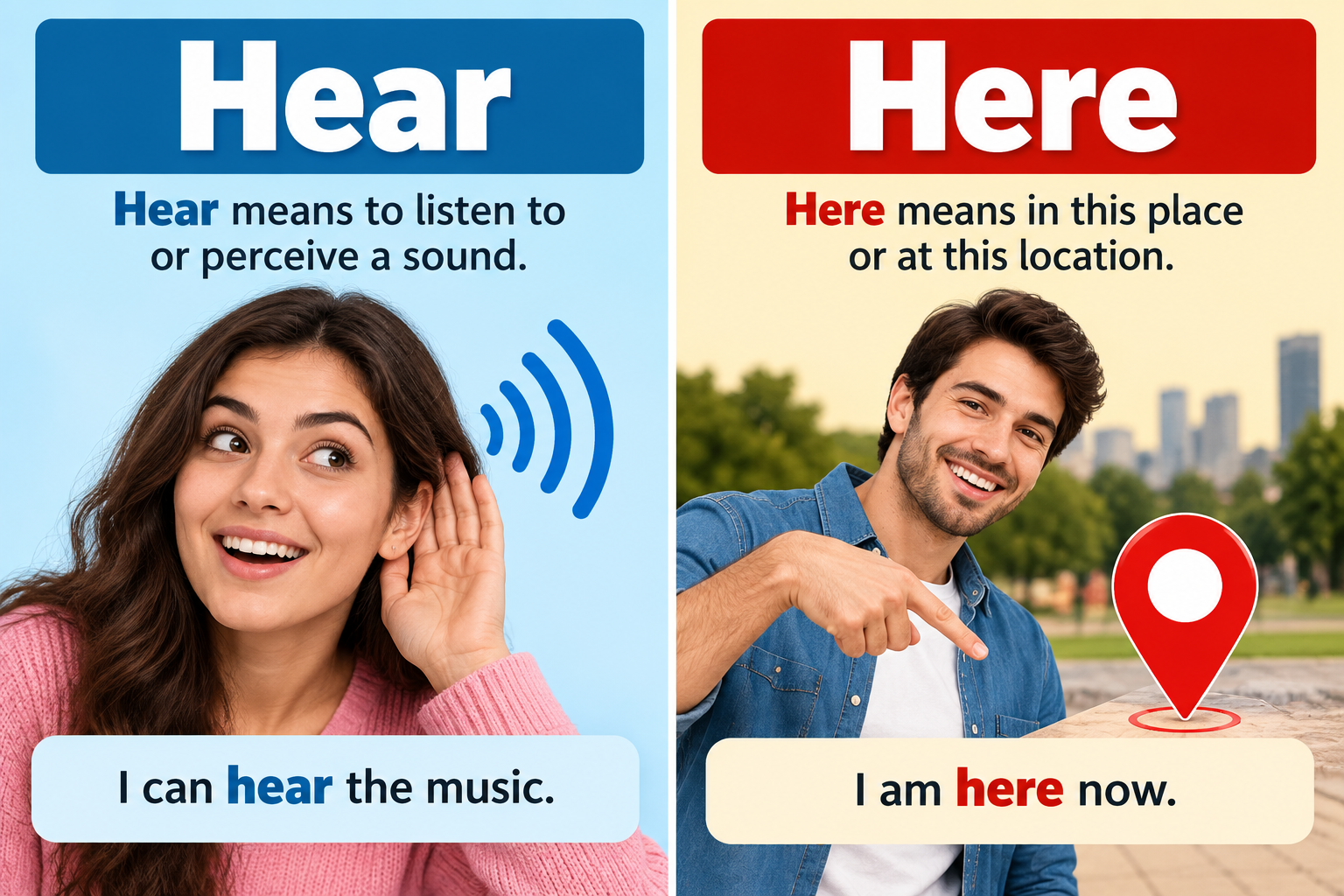
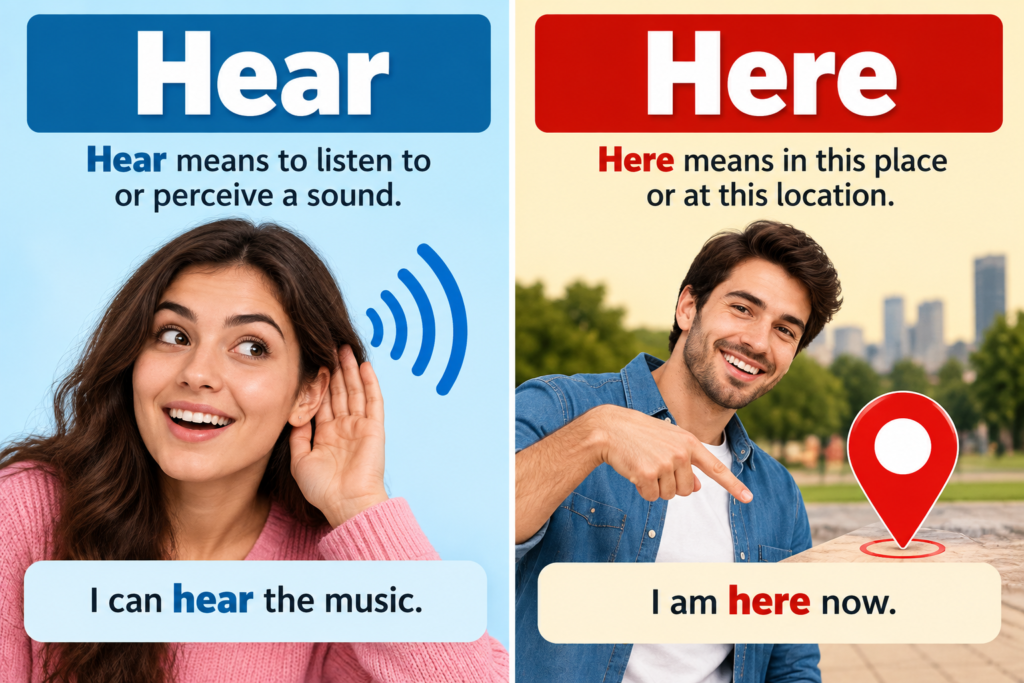
Hear relies on auditory perception and active listening, making it ideal for media, audio, and communications brands. Here signifies presence, real-time location, and immediacy, making it a powerful anchor for tech, logistics, and real-time platforms. Understanding the semantic distinction between hear / here ensures your brand captures immediate consumer attention while optimizing for search engine classification.
Most name generators spit out generic lists without accounting for phonetic friction, domain liquidity, or semantic SEO. Choosing between homophones requires balancing brand positioning with discoverability across Google SERPs and generative AI platforms.
Categorized Brand Names: Hear / Here Semantic Variations
Selecting a name derived from auditory or locational roots requires matching the word’s energy with your core product offering.
Modern & Tech-Forward
- Hearo | Active listening, heroism | Audio tech, noise-canceling hardware, podcast apps
- Hereq | Location intelligence, precision | GIS mapping, hyper-local delivery networks
- HearPulse | Rhythm, real-time feedback | HealthTech, acoustic diagnostic tools
- HereSpot | Absolute presence, convenience | Micro-mobility, co-working space aggregators
Aesthetic & Minimalist
- Hearn | Clarity, subtle perception | Minimalist headwear, studio monitor speakers
- Herely | Simplicity, present moment | Mindfulness apps, direct-to-consumer skincare
- Heara | Resonance, open dialogue | Social audio spaces, therapy platforms
- Hereon | Forward movement, continuity | Venture capital funds, legacy planning services
Professional & Corporate
- HearCraft | Precision communication, narrative | Executive PR firms, strategic communications
- HerePoint | Exactness, operational hub | Supply chain logistics, enterprise ERP software
- HearVault | Secure audio, compliance | Encrypted dictation tools, legal transcription
- HereGrid | Infrastructure, wide reach | Smart city infrastructure, energy grid management
Linguistic & Naming Psychology Breakdown
Homophones create unique cognitive processing patterns in consumer minds. When consumers evaluate the words hear and here, the brain processes the identical sound /hɪər/ through two entirely different visual and conceptual pathways.
/hɪər/Phonetic Input
<!-- HEAR -->
<div class="hh-card hear-card">
  <div class="hh-word">Hear</div>

  <div class="hh-arrow">↓</div>

  <div class="hh-activation">
    <span class="icon">🧠</span>
    <div>
      <strong>Auditory Cortex Activation</strong>
      <small>Sound Processing</small>
    </div>
  </div>

  <div class="hh-arrow">↓</div>

  <div class="hh-tags">
    <span>🎧 Attention</span>
    <span>🗣️ Voice</span>
    <span>🔊 Sound</span>
  </div>
</div>

<!-- HERE -->
<div class="hh-card here-card">
  <div class="hh-word">Here</div>

  <div class="hh-arrow">↓</div>

  <div class="hh-activation">
    <span class="icon">📍</span>
    <div>
      <strong>Spatial Mapping Activation</strong>
      <small>Location Processing</small>
    </div>
  </div>

  <div class="hh-arrow">↓</div>

  <div class="hh-tags">
    <span>📍 Location</span>
    <span>📅 Today</span>
    <span>👤 Presence</span>
  </div>
</div>
The Phonetic Power of the Open Vowel
The sound /hɪər/ begins with a soft glottal fricative (/h/) and transitions into a high front vowel leading into a rhotic approximation. This phonetic sequence creates an inviting, accessible feel. It lacks hard stops like /p/, /k/, or /t/, making the word easy to speak, memorable, and friction-free across international accents.
Emotional Triggers and Symbolism
- Hear: Triggers feelings of empathy, understanding, community, and responsiveness. It implies that a brand pays attention to its customers.
- Here: Activates feelings of reliability, availability, safety, and immediacy. It signals that a solution is available right now, right where the user stands.
Brand Compatibility and Meaning Matrix
| Brand Name | Primary Meaning & Vibe | Ideal Industry / Brand Fit | Target Search Intent |
| Hearo | Heroic sound quality, elevated listening | Consumer Electronics, Audio | Functional & Product-Led |
| Hereq | Quick presence, instant location | On-Demand Delivery, Logistics | Navigational & Service-Led |
| HearPulse | Vital sound tracking, live feedback | MedTech, Acoustic Diagnostics | Informational & B2B |
| HerePoint | The exact center, grounded focus | Real Estate Tech, Enterprise Software | Transactional & SaaS |
| HearCraft | Meticulous communication management | PR Agencies, Corporate Communications | High-Ticket Service |
| HereGrid | Connected spatial network | Smart Cities, Infrastructure | Enterprise & B2B |
Common Pitfalls When Selecting Homophone Names
- Audio-Visual Confusion in Voice Search: If your brand relies heavily on voice assistants (Alexa, Siri, Google Assistant), using homophones creates disambiguation errors. Voice engines may misinterpret the context and direct users to a competitor.
- Domain Name Bottlenecks: Securing the
.comfor exact-match four-letter words like “Hear” or “Here” requires a massive capital expenditure. Attempting to bypass this with awkward hyphens or spelling modifications degrades brand trust. - Search Engine Disambiguation Friction: Search algorithms analyze contextual co-occurrence. If your brand name is identical to a common adverb or verb, ranking organically requires significantly more topical authority and structured schema markup.
Strategic Selection Framework
- Map Core Brand Intent: Determine whether your primary value proposition rests on listening and communication (Hear) or location, access, and immediacy (Here).
- Conduct Voice-Interface Testing: Test speech recognition tools by speaking your target name in five different sentences to check for accurate transcription.
- Verify Domain and Handle Availability: Check primary TLDs alongside clean modifiers (e.g.,
Get[Name].com,Use[Name].com,[Name]App.com). - Run Phonetic and Trademark Audits: Screen search databases across your primary operating regions to ensure zero direct overlap in your industry classification.
- Deploy Schema Markup Early: Utilize
OrganizationandBrandJSON-LD schema on your main landing pages to establish clean entity relationships for AI search engines.
Frequently Asked Questions
Why do brands choose homophone names like Hear or Here?
Brands choose these names because they use short, familiar words that consumers already know. This reduces cognitive load and makes the name easy to recall, while allowing the brand to attach fresh meaning to an everyday term.
How do I optimize a brand named “Hear” or “Here” for generative engines like ChatGPT and Perplexity?
Focus on establishing strong entity co-occurrence. Consistently associate your brand name with specific industry terms (e.g., “Hear Audio Tech Platform”) across third-party press, structured JSON-LD data, and authoritative industry directories.
Which domain strategies work best if the exact match .com is taken?
Use action-oriented prefix modifiers such as Try, Get, or Join, or clear suffix modifiers like App, HQ, or Labs. Avoid using hyphens or deliberate misspellings, as they erode consumer trust and hurt word-of-mouth marketing.
The Golden Rule of Homophone Brand Selection
If a customer hears your brand name in a crowded room, they must instantly know how to spell it in their browser without asking for clarification.
