


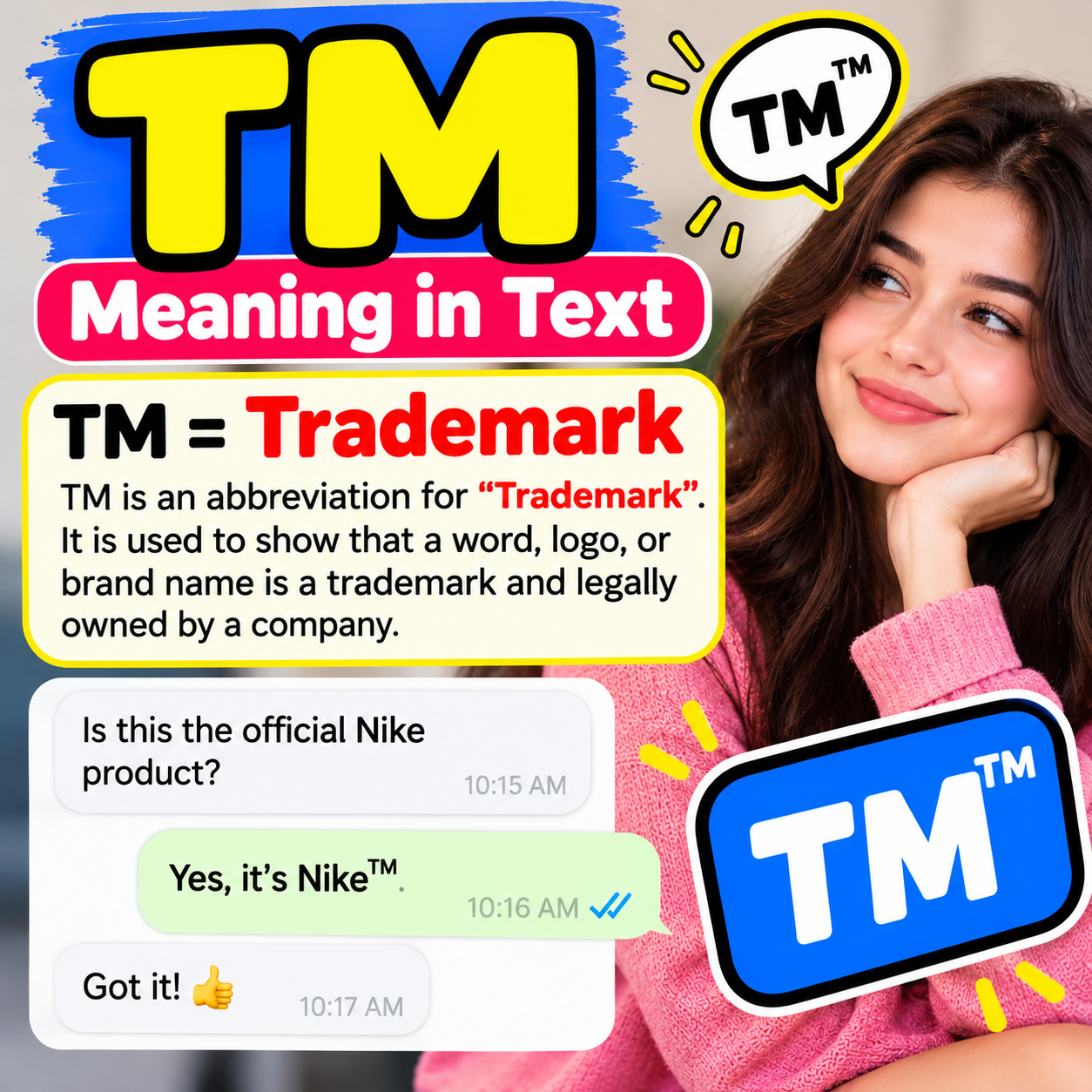
In digital communication, “TM” most commonly stands for “Text Me” in casual texting, while in business and branding, it signifies an unregistered “Trademark” or “Tomorrow.” Deciphering the exact TM meaning in text depends entirely on whether it appears in lower-case messaging threads or appended to a corporate name.
Here’s where most people get tripped up: human shorthand evolves overnight, yet legal intellectual property rules stay rigid. If you skim standard online acronym lists, you’ll find zero strategic context on how shorthand intersects with digital branding and text domain names.
Let’s fix that right now. No jargon, just actionable facts.
The Primary Meanings of “TM” in Text Messages
Shorthand thrives on speed. Context dictates which meaning your sender intended.
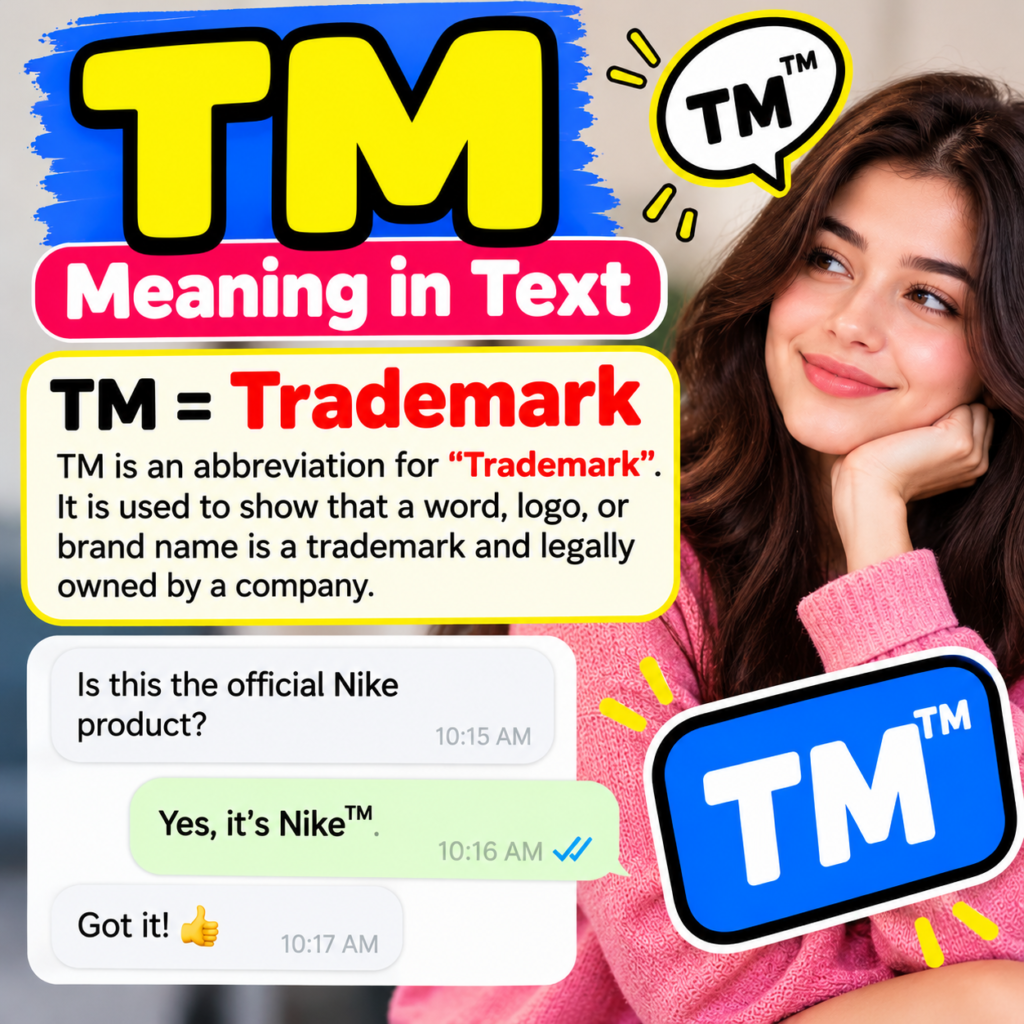
1. Text Me (Casual Chat)
- Vibe/Meaning: A direct request for private, one-on-one communication.
- Best For: Peer-to-peer texting, social messaging apps (WhatsApp, iMessage), informal follow-ups.
- Example: “I just got home, TM when you’re free.”
2. Trademark (Branding & Legal Shorthand)
- Vibe/Meaning: Indicates an unregistered trademark claim on a word mark, phrase, or logo.
- Best For: Startups, brand naming, product launches, domain registration notices.
- Example: “We launched Lilikoi TM to secure our brand concept before official registration.”
3. Tomorrow (Scheduling Shorthand)
- Vibe/Meaning: Time-saving abbreviation for calendar planning and quick check-ins.
- Best For: Rapid work chats, informal scheduling, group texts.
- Example: “Are we still meeting TM at 10 AM?”
4. Trust Me (Emphasis Slang)
- Vibe/Meaning: Assertion of truth or confidence in a statement.
- Best For: Gen Z digital slang, informal debates, gaming chats.
- Example: “This new strategy is going to double conversions, TM.”
5. Too Much (Emotional Expressiveness)
- Vibe/Meaning: Overwhelmed or describing someone acting dramatically.
- Best For: Social media comments, reaction texts.
- Example: “Honestly, that drama was way TM for a Monday.”
Linguistic & Naming Psychology Breakdown
Why does two-letter shorthand like TM hold so much psychological real estate in our brains?
Phonetically, two-letter acronyms create immediate cognitive ease. The human mind seeks efficiency during rapid-fire communication. When users search for the TM meaning in text, they are balancing speed against clarity.
[Speed of Typing]  <--->  [Cognitive Friction]
    (Short/Shorthand)          (Ambiguity/Context Needed)
In modern digital naming and text domain names, brevity reigns supreme. Short text-based identifiers trigger strong visual recall. When brands leverage two-letter or short acronym domains (like .app, .io, or minimalist acronyms), they harness the exact same cognitive habit that drives everyday messaging slang: high speed, low friction, and instant recall.
Comparison & Meaning Matrix
| Definition | Primary Domain / Context | Tone & Intent | Risk of Confusion |
| Text Me | Mobile Messaging & Social | Casual, Direct | Low in casual chat |
| Trademark | Business, Legal & Branding | Authoritative, Protective | High if used informally |
| Tomorrow | Scheduling & Project Updates | Efficient, Time-Sensitive | Moderate in time-bound texts |
| Trust Me | Gen Z Slang & Gaming | Assertive, Conversational | High for older demographics |
| Too Much | Social Media & Reaction | Expressive, Informal | Moderate across general chats |
Common Pitfalls When Selecting Names & Acronyms
Whether choosing a personal handle, an acronym, or building out a portfolio of text domain names, avoid these costly friction points:
- Pronunciation Friction: Avoid letter combinations that create phonetic confusion when spoken aloud.
- Trademark Bottlenecks: Assuming short digital terms or text acronyms are free to use commercially without conducting a thorough trademark search.
- Context Collisions: Using shorthand that carries double meanings in different regions or industry sectors.
- Scaling Limitations: Choosing ultra-short acronyms that lock your brand into a single niche before you have room to pivot.
Strategic Selection Framework
Before adopting an acronym, digital handle, or shorthand name for your next initiative, run it through this four-step validation check:
1.Context Audit:Check for ambiguous meanings.
Review how the acronym functions across urban dictionary entries, industry terminology, and messaging platforms to ensure zero negative associations.
2.Trademark Validation:Mitigate legal risk early.
Search global intellectual property databases (USPTO, WIPO) to confirm the short term doesn’t infringe on existing legal marks.
3.Domain & Handle Availability:Secure your digital real estate.
Verify clean URL availability across core TLDs and social channels, focusing on short, memorable text domain names.
4.Phonetic Testing:Ensure effortless oral transfer.
Say the name aloud 10 times in conversation to ensure it flows naturally without requiring awkward spelling explanations.
Frequently Asked Questions
What does TM mean in standard text messaging?
In 90% of everyday mobile texting, TM stands for “Text Me.” Context usually makes this clear when someone asks you to reach out privately or follow up on a conversation.
What is the difference between TM and ® in business?
TM designates an unregistered trademark claim, signaling to the public that you claim ownership of the brand name or logo. ® indicates a legally registered trademark granted officially by an intellectual property office like the USPTO.
How do text domain names impact brand strategy?
Text domain names—short, highly recognizable domain structures mirroring digital shorthand—boost memorable direct traffic, reduce mobile typing errors, and improve conversion efficiency in modern digital marketing campaigns.
