


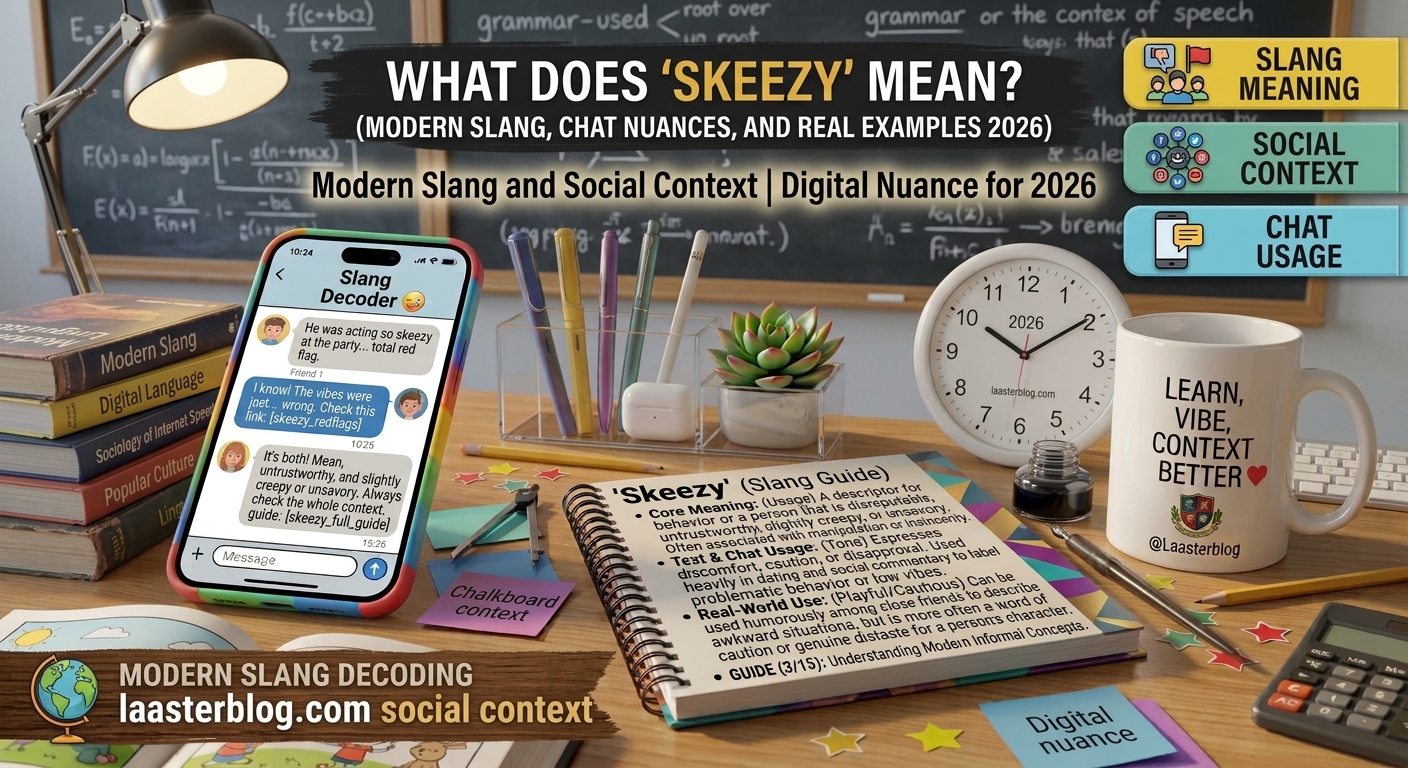
Skeezy is an informal slang adjective used to describe someone or something that feels dishonest, untrustworthy, sleazy, or morally questionable. In everyday text and social media, calling a person or behavior “skeezy” means they give off a shady, creepy, or disreputable vibe.
Whether you spotted the word in an Instagram comment, received it in a text message, or heard it in a TikTok video, understanding its exact tone helps you navigate modern slang without misinterpreting the sender’s intent.
What Does “Skeezy” Mean in Text & Chat?
In modern text conversations and social media posts, skeezy functions as an expressive descriptor for behavior that crosses the line from merely annoying into genuinely sketchy or unethical. Straightforward, no confusion there.
When someone labels a situation or person as skeezy, they are highlighting a blend of predatory, underhanded, or off-putting vibes. It goes beyond a simple dislike; it implies that your instincts are warning you to stay cautious.
- Tone & Attitude: Unsettled, critical, protective, or mildly disgusted.
- Core Intent: Warning a friend or calling out shady conduct before it escalates.
- Vibe Check: High-alert energy combined with casual disapproval.
What Does “Skeezy” Mean From a Guy vs. a Girl?
The context and underlying motivation behind using “skeezy” can shift slightly depending on who sends the message and who they are describing.
When a Guy Uses It
- About another guy: Usually calls out dishonorable behavior, unfair tactics, or overstepping boundaries with women.
- About a deal or offer: Indicates a scam, a hidden trap, or an untrustworthy business proposition.
- In a casual group chat: Operates as a warning to peers to stay away from a specific location, person, or setup.
When a Girl Uses It
- About a guy: Expresses a strong “creepy” or uncomfortable vibe, often referring to unwanted advances, pushy messaging, or Boundary crossing.
- About a business or service: Signals poor safety, hidden charges, or unprofessional treatment.
- To a friend: Serves as a direct protective heads-up to avoid a person or situation entirely.
Quick Reference Table
| Term | Primary Meaning | Short Meaning | Common Tone | Suitable For | Not Suitable For |
| Skeezy | Sleazy, dishonest, creepy, or disreputable | Shady / Sketchy | Critical, Cautious, Informal | Casual texts, group chats, social captions, informal reviews | Formal business emails, academic essays, official reports |
Origin, History & Evolution
The term skeezy emerged in American English slang during the late 20th century (gaining noticeable traction in the late 1980s and early 1990s). It is widely recognized as an informal blend or variation of words like sleazy, sketchy, and skanky.
Over time, the phrase transitioned from street slang and hip-hop culture into mainstream television, movies, and internet forums. While early usage often carried harsh moral judgments, modern digital culture uses “skeezy” more broadly to describe anything ranging from a pushy salesperson or a misleading app subscription to uncomfortable social interactions.
Usage Across Social Media Platforms
- WhatsApp & SMS: Used in private chats to warn friends about uncomfortable dates, bad sellers, or untrustworthy acquaintances.
- Instagram: Frequently seen in story text overlays or comment sections reacting to manipulative behavior, influencer drama, or fake giveaways.
- TikTok: Common in storytime videos detailing bad first dates, retail customer service nightmares, or scam warnings.
- Snapchat: Used in quick caption snaps when showing an uninviting venue, sketchy vehicle, or weird direct message.
Real Chat Examples & Real-World Scenarios
Here is how “skeezy” naturally appears in daily messaging:
Scenario 1: Warning About an Event
Friend A: Are you still going to that party at the warehouse tonight?
Friend B: Nah, the guy hosting it gives off super skeezy vibes. Staying home instead.
Scenario 2: Online Shopping Fraud
Friend A: Did you end up buying those tickets from that resale site?
Friend B: No way, the checkout process looked skeezy. They asked for way too much personal info.
Scenario 3: Dating App Encounter
Friend A: How was your coffee date with Mark?
Friend B: Honestly? He made some skeezy comments within five minutes. I made an excuse and left.
Common Confusions, Mistakes & Wrong Interpretations
Here’s what most people miss when encountering the word:
- Not a Formal Acronym: “Skeezy” is a full descriptive word, not an abbreviation or initialism for a technical term.
- Not Always Malicious: While negative, it can be used lightly or hyperbolically (e.g., “This diner looks skeezy, but the pancakes are amazing”).
- Literal vs. Figurative: It refers to behavior and vibe, not physical cleanliness, though a rundown location can be described as looking skeezy.
- Distinct from “Lazy”: Despite similar rhyming sounds, skeezy has zero connection to being tired or unproductive.
Similar Terms, Alternatives & Cleaner Substitutes
Informal & Slang Synonyms
- Sketchy: Vaguely suspicious or unsafe.
- Shady: Secretive, deceptive, or untrustworthy.
- Creepy: Causing an unpleasant feeling of fear or unease.
- Sus: Short for suspicious; widely used in gaming and meme culture.
Clean & Formal Substitutes
- Untrustworthy: Not worthy of trust or reliance.
- Unethical: Not conforming to correct moral standards.
- Disreputable: Not considered to be respectable in character or appearance.
- Deceptive: Giving an appearance or impression different from the true one.
How to Reply When Someone Uses This Term
Responding effectively depends on whether you agree, need details, or want to de-escalate:
- Supportive / Validating: “Good call trust your gut on that one.”
- Curious / Asking for Details: “Spill the tea, what did they actually do?”
- Playful / Casual: “Yikes, glad I avoided that whole situation then!”
- Reassuring: “Thanks for the heads up, I’ll block them right away.”
Is “Skeezy” Still Popular?
Yes, skeezy remains a steady component of English slang in 2026. While newer Gen Z and Alpha terms like “sus” or “salty” dominate quick meme contexts, skeezy maintains a strong, permanent spot in conversational English because it specifically captures the combined nuance of “sleazy” and “sketchy” in one word.
Search interest and conversational usage stay consistent across North America, the UK, and Australia, particularly in personal safety discussions, dating reviews, and consumer commentary.
Conclusion & Final Takeaway
In short: skeezy is your go-to word for describing anything or anyone that feels shady, unethical, or unsettling. Whenever an interaction, link, or offer makes your instincts tingle with caution, labeling it as skeezy communicates that exact red flag instantly.
