


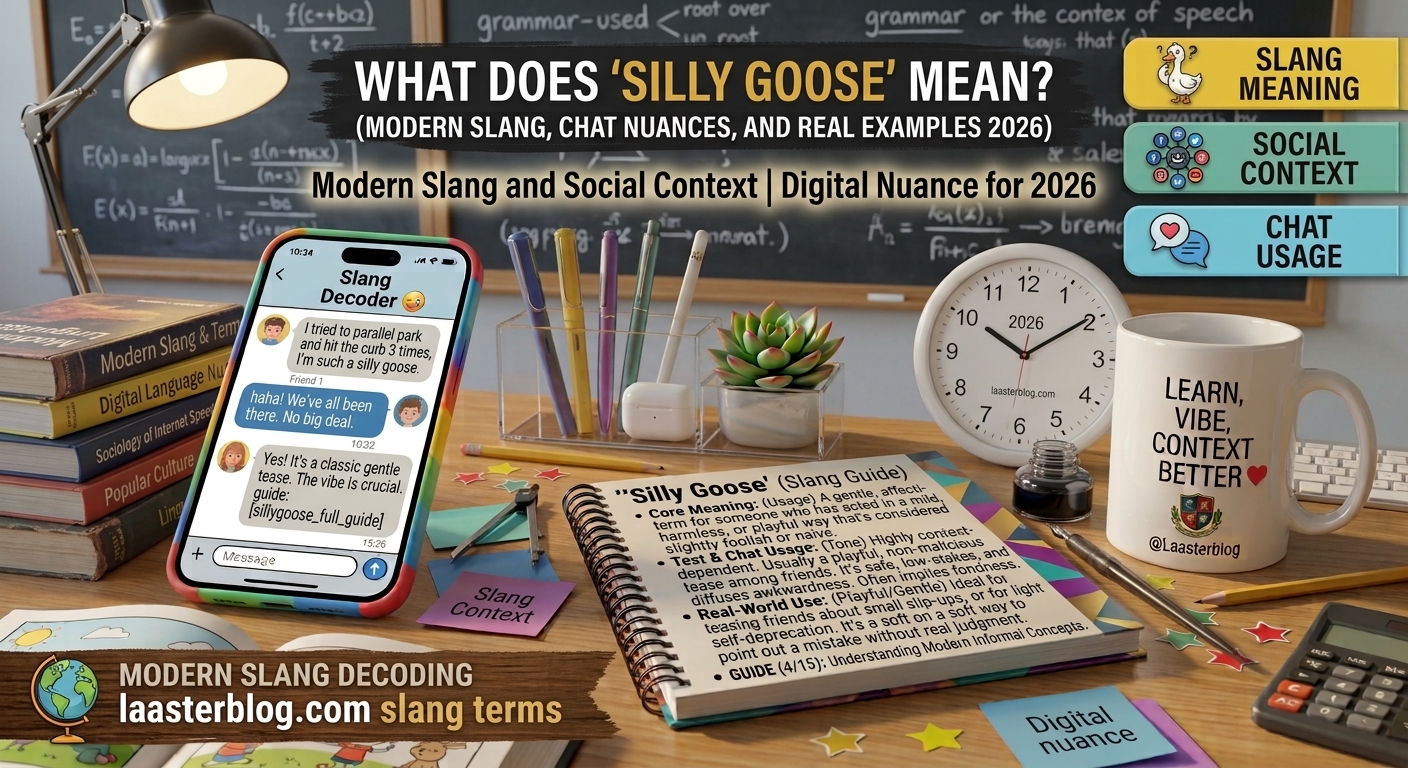
Silly goose is an affectionate, playful idiom used to describe someone acting foolishly, quirky, lighthearted, or delightfully goofy. In modern digital communication and social media, calling someone a “silly goose” serves as a gentle teasing term that highlights mild absurdity without any real malice or intent to offend.
Whether you received the phrase in a flirty text, spotted it in a viral TikTok caption, or heard a friend tease you after a minor mistake, understanding its exact tone helps you respond smoothly and gauge the sender’s underlying affection.
What Does “Silly Goose” Mean in Text & Chat?
In modern text conversations and online chats, silly goose acts as a soft, comforting, and playful descriptor for harmless goofiness. Straightforward, no confusion there.
When someone sends this phrase, they are gently calling out a mistake, a goofy joke, or an overthought situation while simultaneously reassuring you that everything is okay. It strips away the harshness of terms like “idiot” or “fool,” replacing insult with warmth.
- Tone & Attitude: Whimsical, affectionate, lighthearted, and teasing.
- Core Intent: Diffusing tension, teasing affectionately, or showing fondness toward someone’s goofy side.
- Vibe Check: Cozy, wholesome energy combined with friendly banter.
What Does “Silly Goose” Mean From a Guy vs. a Girl?
The tone and social intent of “silly goose” adapt based on who is sending the message and the dynamic you share with them.
When a Guy Uses It
- To a Girl: Often functions as a subtle flirty term of endearment. It shows he finds her quirky habits or minor slip-ups charming rather than annoying.
- To a Male Friend: Used almost exclusively in a sarcastic or humorous way to mock a bad gaming move or goofy mistake without initiating a real confrontation.
- In a Group Chat: Operates as a light diffuser when someone makes a silly typo or overreacts to minor news.
When a Girl Uses It
- To a Guy: A huge indicator of comfort and affection. It softens her critique when he misinterprets something or acts overly dramatic.
- To a Female Friend: Functions as a go-to expression of solidarity, humor, and wholesome bonding over silly decisions or overthinking.
- To a Partner: Serves as a warm, cozy pet name during quiet or playful moments.
Quick Reference Table
| Term | Primary Meaning | Short Meaning | Common Tone | Suitable For | Not Suitable For |
| Silly Goose | A foolish, eccentric, or playful person | Goofy / Playful | Lighthearted, Affectionate, Whimsical | Casual texts, flirtatious banter, pet names, social captions | Formal business emails, serious arguments, legal/academic papers |
Origin, History & Evolution
The phrase silly goose dates back centuries in English folklore, drawing on the historic trope that geese are easily flustered, noisy, and erratic birds. The word “silly” itself originally meant “blessed” or “innocent” in Middle English before evolving into “foolish,” which perfectly explains why the phrase has always retained an innocent, wholesome feel.
In the late 20th century, it became a staple phrase used by parents and teachers to correct children gently. However, in modern internet culture—especially across TikTok, Pinterest, and meme communities—the term experienced a massive resurgence as part of the “wholesome internet” movement. Today, adults use it deliberately to avoid harsh slang and add a touch of playful vintage charm to their chats.
Usage Across Social Media Platforms
- WhatsApp & SMS: Sent after someone sends a voice note overexplaining themselves or panicking over a small error.
- Instagram: Frequently used in photo dumps, couple captions (“Just a couple of silly geese in Paris”), or wholesome story replies.
- TikTok: Common in relatable storytelling videos, animal clips, and comments teasing creators who make self-deprecating mistakes.
- Snapchat: Used on goofy selfies, funny face filter snaps, or quick casual updates.
Real Chat Examples & Real-World Scenarios
Here is how “silly goose” naturally appears in everyday digital messaging:
Scenario 1: Reassuring an Overthinker
Friend A: Oh no, I am so sorry I arrived 5 minutes late! I ruined the plan!
Friend B: You didn’t ruin anything, you silly goose! We haven’t even ordered food yet.
Scenario 2: Playful Flirting
Friend A: I accidentally brought two different colored socks to the gym today.
Friend B: Haha, you’re such a silly goose. That’s actually kind of cute though.
Scenario 3: Correcting a Misunderstanding
Friend A: Wait, did you mean we are meeting tomorrow? I thought you were mad at me!
Friend B: Mad? No way, silly goose! I was just busy at work.
Common Confusions, Mistakes & Wrong Interpretations
Here’s what most people miss when encountering this phrase:
- Not an Insult: Despite containing a word synonymous with “foolish,” it is never intended to harm or demean someone’s intelligence.
- Literal vs. Figurative: It has zero connection to actual poultry, birds, or wildlife unless used as a literal pun on a farm video.
- Not an Acronym: “Silly goose” is a traditional English idiom, not a modern text abbreviation like IMO or SMH.
- Tone Misread: Taking it seriously during a tense disagreement can cause unnecessary confusion; it is meant to lower the stakes, not elevate them.
Similar Terms, Alternatives & Cleaner Substitutes
Playful & Slang Synonyms
- Goofball: Someone who acts silly or eccentric in an endearing way.
- Silly Billy: A classic, virtually interchangeable wholesome idiom.
- Goober: A warm, mildly absurd slang term for a goofy person.
- Goof: Short, simple, and lighthearted way to describe someone acting silly.
Clean & Formal Substitutes
- Foolish: Exhibiting a lack of good sense or judgment (formal).
- Eccentric: Unconventional and slightly strange in a whimsical way.
- Playful: Full of fun and good humor.
- Lighthearted: Amusing and untroubled by seriousness.
How to Reply When Someone Uses This Term
Responding to “silly goose” depends on the dynamic and how playful you want to be:
- Playful / Leaning In: “Guilty as charged! 🪿”
- Flirty / Teasing: “Hey, only for you!” or “Takes one to know one!”
- Casual / Reassured: “Haha thanks, I was definitely overthinking that.”
- Humorous Counter: “Honk honk! Guess I’ll embrace the goofiness today.”
Is “Silly Goose” Still Popular?
Yes, silly goose continues to enjoy strong popularity in 2026. As online spaces often lean into aggressive slang or heavy sarcasm, wholesome and comforting idioms like “silly goose” have carved out a permanent home in digital culture.
Search interest and daily usage remain high, driven by meme culture, cozy aesthetics, and people seeking friendly, non-toxic terms of endearment in texting and relationships.
Conclusion & Final Takeaway
In short: silly goose is the ultimate wholesome term for calling out harmless goofiness without causing offense. Whenever someone uses it with you, remember the golden rule: it is a sign of warmth, comfort, and affection—never a real criticism.
