


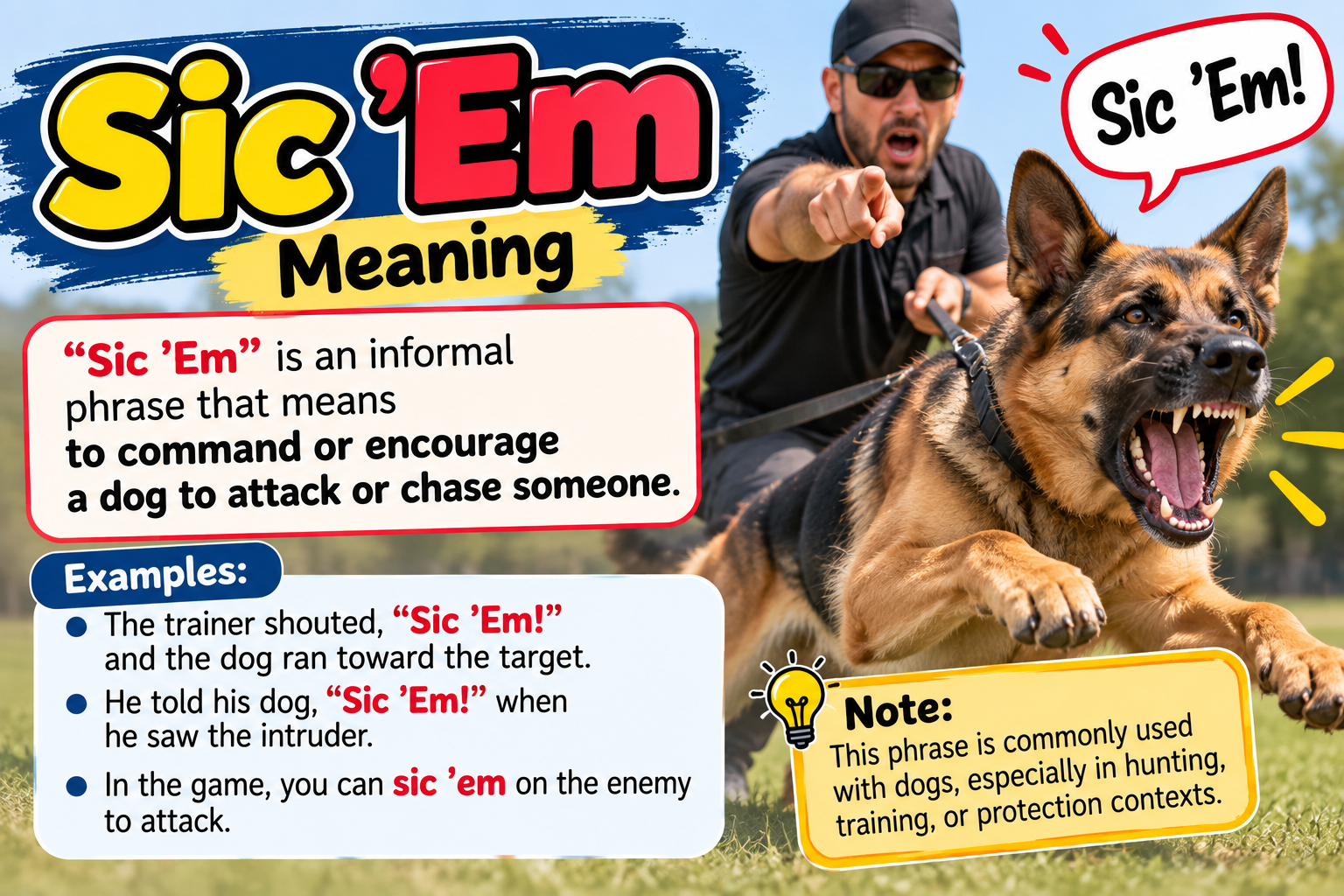
The phrase “sic ’em” is a colloquial imperative derived from the word “seek,” traditionally used to command an attack dog to pursue or charge at a target. In modern usage and digital slang, sic em meaning has evolved into a high-energy rallying cry that signals aggression, intense enthusiasm, hyper-competition, and unyielding momentum.
Most generic business registers treat phrase origins as plain trivia, failing to explain how dynamic idioms actively shape consumer perception. Understanding sic ’em slang allows modern founders and creative directors to tap into built-in psychological triggers—transforming a aggressive phrase into a powerful brand asset.
Categorized Brand Names Inspired by “Sic ’em” Energy
Here is how high-octane, action-oriented phrasing translates across various brand identity frameworks:
1. High-Energy & Athletic Brands
- Syc&Destroy | Aggressive, unapologetic, competitive | High-performance athletic apparel, combat sports gear.
- SicDogs | Relentless, loyal, fierce team spirit | Cross-training facilities, competitive esports teams.
- SicTrak | Laser-focused, direct, unstoppable path | High-intensity interval training apps, endurance tracking.
2. Modern Tech & Disruptive Startups
- SicFlow | Fast-paced, automated, relentless efficiency | B2B automation tools, DevOps infrastructure.
- SicPulse | Real-time, sharp, high-octane monitoring | Cybersecurity platforms, live data analytics.
- SicLab | Experimental, aggressive innovation, cutting-edge | Web3 development, performance software.
3. Bold Lifestyle & Streetwear
- Sic&Co | Rebellious, raw, urban edge | Streetwear labels, independent audio hardware.
- SicVibe | Unfiltered, intense, high-octane atmosphere | Underground event production, energy drinks.
- SicAura | Dominant, striking, bold presence | Premium athletic accessories, luxury action sports.
Linguistic & Naming Psychology Breakdown
Here is where most founders get it wrong: they select names based solely on dictionary definitions rather than phonetic resonance.
The phonetic structure of sic ’em relies heavily on a sharp, plosive consonant pair ($/s/$ and $/k/$) followed by a brief nasal closure ($/m/$). This acoustic combination triggers an immediate neurological response linked to urgency, speed, and sharp focus.
- Phonetic Friction: The hard “K” sound in “sic” forces a abrupt vocal stop, making the phrase sound punchy, assertive, and easily memorable.
- Psychological Triggers: It activates feelings of action, urgency, and dominance over passive alternatives.
- Subconscious Association: Consumers naturally pair the phrase with drive, determination, and competitive superiority.
Meaning and Application Matrix
| Name / Term Variant | Core Meaning / Vibe | Ideal Industry / Brand Fit |
| Sic ‘Em | High-energy attack directive, competitive rallying cry | College sports merchandise, action gear |
| SicFlow | Rapid execution, uninterrupted momentum | SaaS products, workflow software |
| SicDog | Ferocious loyalty, relentless drive | Fitness communities, combat apparel |
| SicLab | Aggressive testing, rapid iteration | Tech incubators, venture studios |
| SicVibe | High-intensity energy, striking confidence | Lifestyle media, music production |
Common Pitfalls When Selecting High-Impact Names
No jargon, just facts: choosing an aggressive or slang-driven name comes with distinct operational risks if executed without strategy.
- Pronunciation Friction: Using obscure phonetic spellings (e.g., Syck’m) creates unnecessary cognitive load and causes voice-search failures on mobile devices.
- Trademark Bottlenecks: Phrases rooted in popular university slogans or athletic chants (such as Baylor University’s classic “Sic ‘Em Bears”) carry heavy legal protections in sports and apparel categories.
- Scaling Limitations: Choosing an ultra-aggressive name might work well for a boutique gym, but it can limit your brand if you pivot into enterprise software or B2B services.
Strategic Selection Framework
Let’s break down the exact steps to evaluate, test, and launch a high-octane brand name using sic ’em slang dynamics.
Three Phase Audit Process
<h2 class="audit-title">
    Three-Phase Audit Process
</h2>

<p class="audit-subtitle">
    A structured process for reviewing a name, phrase, or concept
</p>

<div class="audit-flow">

    <!-- Phase 1 -->
    <div class="audit-card">
        <div class="phase-number">1</div>

        <div class="phase-label">
            Phase 1
        </div>

        <div class="phase-title">
            Phonetic Test
        </div>
    </div>

    <div class="flow-arrow">
        ➔
    </div>

    <!-- Phase 2 -->
    <div class="audit-card">
        <div class="phase-number">2</div>

        <div class="phase-label">
            Phase 2
        </div>

        <div class="phase-title">
            Entity & IP Audit
        </div>
    </div>

    <div class="flow-arrow">
        ➔
    </div>

    <!-- Phase 3 -->
    <div class="audit-card">
        <div class="phase-number">3</div>

        <div class="phase-label">
            Phase 3
        </div>

        <div class="phase-title">
            GEO Signal Check
        </div>
    </div>

</div>

<div class="audit-note">
    <strong>Process overview:</strong>
    Each phase examines a different aspect of the subject, moving from
    phonetic considerations to entity and intellectual-property review,
    followed by a geographic or GEO signal check.
</div>- The Audio Stress Test: Say the name aloud three times in a noisy room. If the listener asks you to spell it out, the phonetic friction is too high for natural word-of-mouth growth.
- The Intellectual Property Audit: Conduct exact-match trademark searches across Class 25 (Apparel), Class 35 (Advertising/Business), and Class 42 (Software) before committing capital to a domain purchase.
- Generative AI Visibility Test: Query platforms like ChatGPT, Perplexity, and Google AI Overviews using your target terms. Ensure your chosen name does not get buried underneath established university sports history or unrelated cultural references.
Frequently Asked Questions
What is the exact origin and sic em meaning?
The term sic ’em originated as a dialectal alteration of “seek them,” commonly spoken as a command to hunting or working dogs. Over time, it expanded into everyday American slang to mean attacking a challenge or opponent with full force.
How is sic ’em slang used in modern contexts?
In modern language and sports culture, the phrase is used as an encouraging slogan to spur someone on toward a goal, convey high energy, or cheer on a sports team during competitive moments.
Is “sic ’em” suitable for a commercial brand name?
Yes, provided the brand targets audiences that value edge, high performance, speed, or raw energy. However, companies must carefully check trademark registries to avoid conflicts with established college sports trademarks and legacy apparel brands.
The Golden Rule of High-Impact Naming
A great name never apologizes for its tone—it signals clear positioning, demands attention, and turns passive listeners into active brand advocates.
