


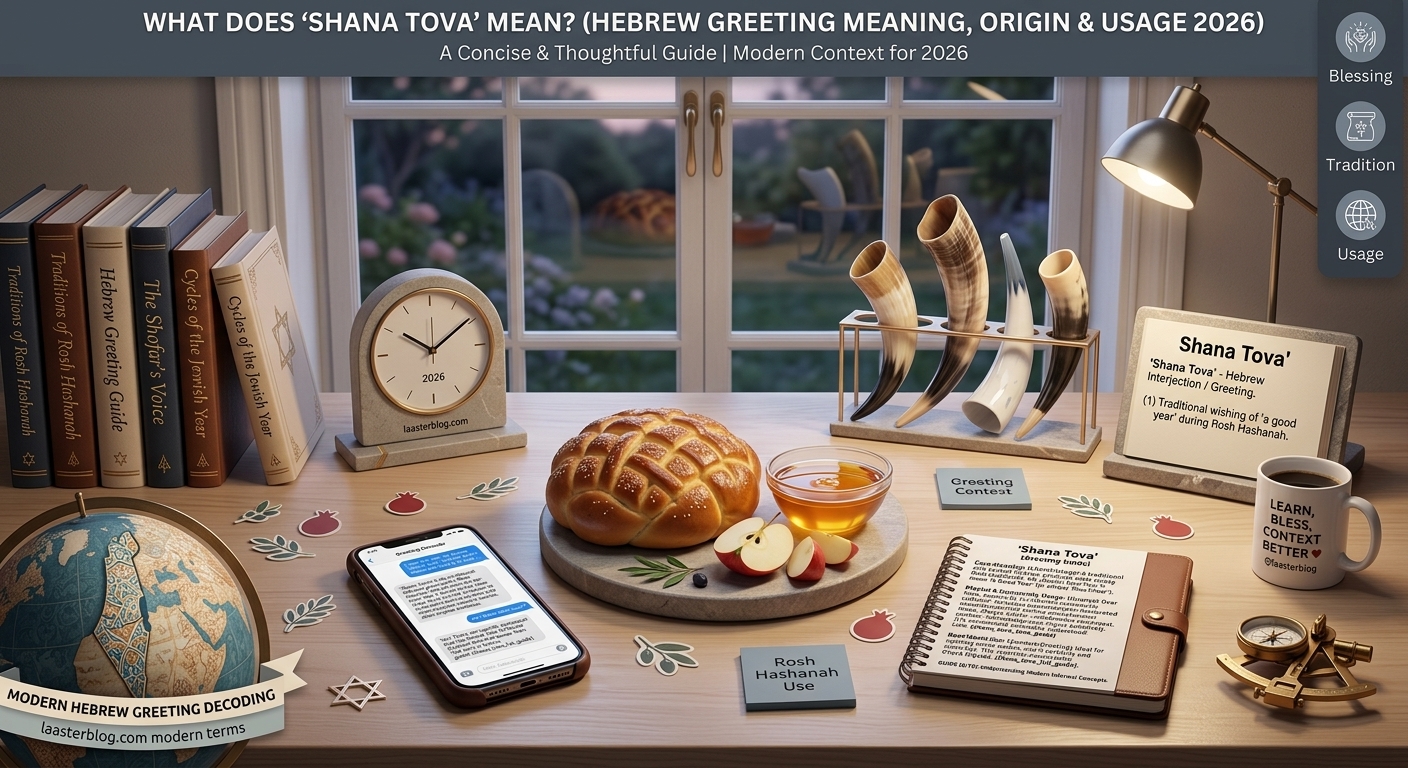
“Shana Tova” (שָׁנָה טוֹבָה) is a traditional Hebrew greeting that translates literally to “Good Year” and is used to wish someone a Happy Jewish New Year. It serves as the primary seasonal blessing offered during Rosh Hashanah, expressing warm wishes for sweet beginnings, prosperity, and blessings in the year ahead.
Whether typed in a festive text, written inside a holiday card, or shared across social media, the phrase carries a deeply respectful, joyful, and warm sentiment.
What Does “Shana Tova” Mean in Text & Chat?
In digital communication, sending “Shana Tova” is the most common way to extend Jewish New Year wishes to friends, family, colleagues, and acquaintances.
When someone drops a “Shana Tova!” in your inbox or group chat around late September or early October, they are taking a moment to send heartfelt seasonal blessings.
- Core Meaning: “Happy New Year!” / “Have a good and sweet year ahead!”
- Attitude & Tone: Warm, respectful, festive, supportive, and traditional.
- Context: Shared during Rosh Hashanah across personal texts, holiday broadcasts, professional email signatures, and family threads.
Straightforward, no confusion there. It is a universal, respectful greeting suitable for both Jewish and non-Jewish contexts.
What Does “Shana Tova” Mean From a Guy vs. a Girl?
Because “Shana Tova” is a formal, culturally rich holiday greeting rather than personal slang or romantic code, its core meaning remains identical regardless of who sends it. However, subtle social dynamics exist based on sender context:
When a Guy Sends “Shana Tova”
- Friendly & Respectful: Guys often send it to friends, extended family, or colleagues to acknowledge the holiday (“Shana Tova man! Hope you have a great holiday with family.”).
- Warm Professional Outreach: In workplace messaging (Slack/LinkedIn), a guy sending it to clients or coworkers signals professional courtesy and cultural awareness.
When a Girl Sends “Shana Tova”
- Festive Hospitality: Girls frequently send detailed holiday greetings, photo updates of Rosh Hashanah dinners, or sweet-wishes graphics to friend groups and family circles.
- Thoughtful Connection: When sent individually, it reflects a warm, attentive gesture ensuring everyone feels included in the holiday spirit.
In short: from anyone, “Shana Tova” is a sincere, positive holiday blessing—the relationship simply dictates how formal or conversational the message is.
Quick Reference Table: “Shana Tova” At a Glance
| Feature | Details |
|---|---|
| Term | Shana Tova (שָׁנָה טוֹבָה) |
| Full Form / Primary Meaning | “Good Year” (Happy Jewish New Year) |
| Short Meaning | Happy Rosh Hashanah / Sweet New Year |
| Common Tone | Warm, respectful, festive, traditional |
| Primary Platforms | WhatsApp, SMS, Instagram, Facebook, Email, LinkedIn |
| Suitable For | Friends, family, Jewish colleagues, holiday cards, social posts |
| Not Suitable For | Sad/condolence occasions, unrelated non-festive situations |
Origin, History & Evolution of the Phrase
The origin of “Shana Tova” stems directly from Biblical Hebrew and ancient Jewish tradition:
- Hebrew Linguistic Roots: The word Shana (שָׁנָה) means “year,” while Tova (טוֹבָה) is the feminine form of “good.” Together, they form the fundamental blessing for the agricultural and spiritual new year starting on 1 Tishrei (Rosh Hashanah).
- Evolution of the Full Blessing: Traditionally, the greeting expanded into “L’Shana Tova Tikatevu v’Tichatemu” (“May you be inscribed and sealed for a good year” in the Book of Life). Over centuries, everyday speakers shortened this for casual speech and writing into the simple, memorable “Shana Tova.”
- Global Adoption: With global digital communication, “Shana Tova” has transcended religious boundaries, becoming a widely recognized phrase used globally by friends of all backgrounds to honor Jewish celebrations.
Over time, adding “U’Metuka” (making it “Shana Tova U’Metuka”) became popular to wish others a “good and sweet year,” symbolizing traditional apples dipped in honey.
Usage Across Social Media Platforms
- WhatsApp & SMS: Sent as quick individual texts or broadcast wishes right before sunset on Rosh Hashanah (“Shana Tova to you and the family! 🍎🍯”).
- Instagram & TikTok: Used in story captions, reel overlays, and holiday table setups featuring apples, honey, and pomegranates.
- Facebook: Posted as status updates or shared inside family groups to reach international relatives.
- LinkedIn & Email: Used in professional outreach to show holiday respect and acknowledge Jewish colleagues and clients.
Real Chat Examples & Real-World Scenarios
Scenario 1: Casual Text Between Friends
Friend A: Hey! Wishing you and your family a very happy Rosh Hashanah! 🍎
Friend B: Thanks so much! Shana Tova to you too!! Have an amazing week!
Scenario 2: Family Group Chat
Relative: Shana Tova U’Metuka everyone! May this year bring health and happiness! 🍯✨
Group Member: Shana Tova! Wish we were all eating round challah together tonight!
Scenario 3: Workplace / Professional Courtesy
Colleague A: Just wrapping up for the day before the holiday starts.
Colleague B: Have a wonderful break! Shana Tova!
Common Confusions, Mistakes & Wrong Interpretations
- Confusing Rosh Hashanah with Yom Kippur:
- “Shana Tova” is the primary greeting for Rosh Hashanah (New Year). For Yom Kippur (Day of Atonement, ten days later), the appropriate greeting is “Gmar Chatima Tova” or “Have an easy fast.”
- Grammar & Spelling Variations:
- You may see Shanah Tovah, L’Shana Tova, or Shana Tova U’Metuka. All variations are correct and share the same core intent.
- Inappropriate Contexts:
- That’s not a glitch, but common sense: avoid using “Shana Tova” outside the Jewish New Year season (autumn) or during solemn, non-festive occasions.
Similar Terms, Alternatives & Cleaner Substitutes
Related Hebrew Greetings
- Shana Tova U’Metuka: “A good and sweet new year!”
- Chag Sameach: “Happy Holiday!” (General greeting used across Jewish holidays).
- Gut Yontiff: Yiddish equivalent meaning “Have a good holiday.”
- L’Shana Tova: “For a good year.”
English Substitutes
- “Happy Jewish New Year!”
- “Wishing you a sweet and prosperous new year!”
- “Happy Rosh Hashanah!”
How to Reply When Someone Uses This Term
When someone wishes you “Shana Tova,” replying is simple and welcoming regardless of your background:
Standard & Traditional Responses
- “Shana Tova to you as well!”
- “Thank you! Wishing you a sweet new year!”
- “Shana Tova U’Metuka!”
Friendly & Casual
- “Thank you so much! Hope you have a wonderful holiday!”
- “Thanks! Enjoy the celebrations with your family! 🍎”
Is “Shana Tova” Still Popular? (Current Trends & Longevity)
Yes, “Shana Tova” remains the definitive, timeless greeting for Rosh Hashanah worldwide.
With increasing global connectivity, digital greeting cards, and social media celebration posts, the phrase sees massive search spikes every autumn during the High Holy Days. It maintains a permanent, cherished place in both traditional religious life and modern digital communication.
Final Takeaway
Here’s what to remember: “Shana Tova” simply means “Good Year.” It is a warm, universally appreciated blessing for health, happiness, and sweet beginnings during Rosh Hashanah that anyone can share with confidence.
