


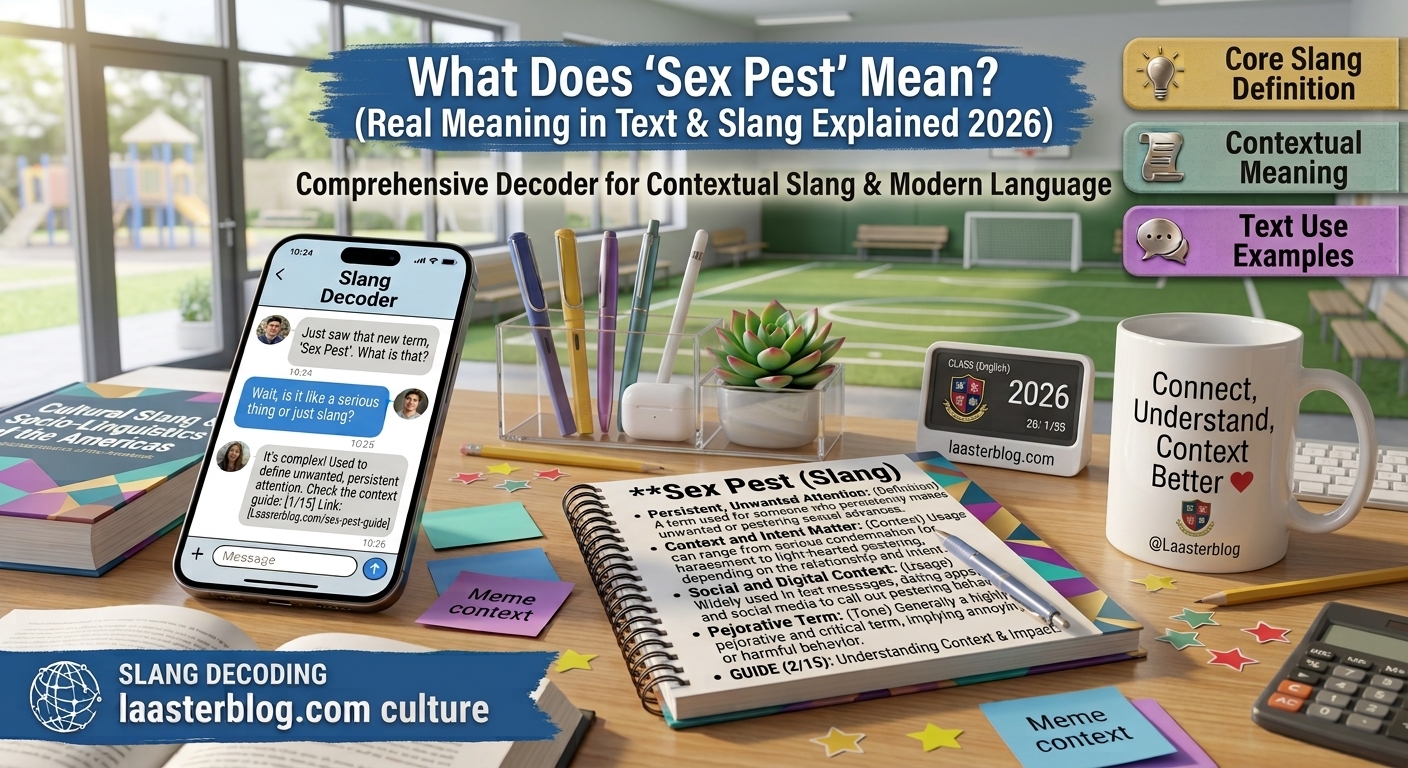
A sex pest is a derogatory term used to describe someone who repeatedly subjects others to unwanted sexual attention, persistent harassment, or inappropriate advances. The phrase refers to an individual whose behavior creates discomfort, boundary violations, and ongoing distress through persistent unwanted flirting or intrusive contact.
What Does Sex Pest Mean in Text & Chat?
In digital messaging and social media discussions, calling someone a sex pest labels them as persistent, invasive, and completely incapable of taking a hint. It implies a pattern of behavior where an individual repeatedly crosses personal boundaries despite clear signals of disinterest.
Depending on the context, the phrase carries distinct emotional and social tones:
- Direct Warning or Calling Out: Warning friends about a specific user who will not stop sending intrusive DMs or explicit messages (“Block him immediately, he’s a total sex pest”).
- Describing Persistent Online Harassment: Referring to someone who repeatedly double-texts, leaves unsolicited comments on photos, or demands attention (“I had to set my account to private because of that sex pest”).
- Expressing Disgust or Frustration: Highlighting uncomfortable nightlife, workplace, or social encounters where someone refused to leave others alone (“He wouldn’t stop following us around the venue like a sex pest”).
Straightforward, no confusion there. It calls out behavior that crosses from mild awkwardness into active boundary violation and harassment.
What Does Sex Pest Mean From a Guy vs. a Girl?
While the core definition remains identical regardless of who uses the phrase, the social context and intent often shift depending on the speaker and relationship dynamic.
When a Girl Uses the Term
Women most frequently use sex pest as a protective warning, a boundary-enforcing label, or a serious critique of unwanted behavior experienced online or in person.
- Subtext: Protective warning, frustration, calling out boundary violations, or expressing discomfort.
- Example: “He slid into my DMs for the fifth time this week after I ignored him—classic sex pest behavior.”
When a Guy Uses the Term
When men use the phrase, it is often to call out inappropriate behavior among peers, distance themselves from someone acting inappropriately in a group, or defend a friend.
- Subtext: Peer accountability, calling out uncomfortable behavior in social settings, or validating a friend’s experience.
- Example: “Dude, stop texting her three times in a row when she hasn’t replied, don’t be a sex pest.”
Quick Reference Table: Sex Pest at a Glance
| Aspect | Details |
| Primary Meaning | A person who repeatedly engages in unwanted sexual attention or harassment |
| Short Meaning | Persistent, unwanted, boundary-crossing annoyance or harasser |
| Common Tone | Critical, serious, derogatory, protective, direct |
| Suitable For | Private chats, advice forums, social safety warnings, venting to friends |
| Not Suitable For | Professional correspondence, formal work environments, casual banter |
Origin, History & Evolution of the Term
The term sex pest originated in British English slang during the late 20th century, combining “sex” with “pest” (an annoying or destructive nuisance). It initially gained widespread traction in UK tabloids and public discourse to describe individuals involved in low-level public harassment or persistent unwanted advances.
Over time, global internet culture, social media platforms, and online dating apps adopted the term worldwide. As digital communication expanded, the definition evolved from physical space encounters to include online behaviors like persistent DMs, unsolicited photos, and relentless comment spamming.
Usage Across Social Media Platforms
Here is how the term surfaces across different apps today:
- WhatsApp & iMessage: Used in private group chats to warn friends about uncomfortable encounters or share screenshots of persistent messages.
- TikTok & Instagram: Appears in story commentary, storytimes, and video overlays discussing online dating safety, red flags, and personal boundaries.
- X (Twitter) & Reddit: Frequently used in commentary threads, relationship subreddits, and pop culture discussions when evaluating public behavior or workplace dynamics.
- Snapchat: Used in direct texts or private stories when documenting persistent unwanted adds or chats.
Real Chat Examples & Real-World Scenarios
Here is how the term appears in natural messaging exchanges:
Scenario 1: Warning a Friend About Online Interactions
Friend A: Who is that guy who kept replying to all your stories last night?
Friend B: Honestly no idea, but he won’t stop sending weird messages. Total sex pest.
Scenario 2: Calling Out Behavior in a Group
Friend A: Should I send her another message? She hasn’t opened the last two.
Friend B: No, leave it alone. Don’t act like a sex pest, she’ll reply if she wants to.
Scenario 3: Discussing Social Outings
Friend A: How was the party last night?
Friend B: It was fine until some sex pest kept following us around the bar ignoring every hint.
Common Confusions, Mistakes & Wrong Interpretations
Here’s what most people miss: sex pest is a serious social accusation, not a lighthearted jest.
- Slang vs. Legal Terminology: While “sex pest” is widely used social slang, official legal frameworks generally categorize this behavior under formal terms like sexual harassment, stalking, or unlawful coercion.
- Confusing Flirting with Harassment: Flirting involves mutual interest and consent. The defining feature of a sex pest is persistence after disinterest or refusal has been communicated.
- Misusing in Light Situations: Calling someone this term playfully can cause significant misunderstandings because the phrase carries strong negative social implications.
Similar Terms, Alternatives & Cleaner Substitutes
Depending on whether you need informal slang or formal terminology, several alternatives exist:
Informal Slang Alternatives
- Creep: General term for someone who makes others feel unsafe or uncomfortable.
- Groomer / Harasser: Specific terms used depending on the nature and severity of the action.
- Serial Swiper / DM Slider: Mild internet slang for over-persistent online daters.
Formal & Professional Substitutes
- Harasser: A person engaging in unwanted, aggressive behavior.
- Inappropriate Individual: Professional wording for workplace or organizational reports.
- Perpetrator of Unwanted Conduct: HR or legal phrasing for boundary violations.
How to Reply When Someone Uses This Term
If a friend uses this term in conversation with you, here are effective ways to respond based on the situation:
- Supportive & Validating: “That sounds so uncomfortable, have you blocked them yet?”
- Direct Advice: “Definitely set your profile to private or report the account.”
- Groundinging / Reality Check: “Yeah, you made it clear you weren’t interested. You don’t owe them a reply.”
Is Sex Pest Still Popular?
Yes. The phrase remains a staple of modern vocabulary, particularly across the UK, Australia, North America, and digital communities worldwide. With the prominence of online dating, direct messaging platforms, and ongoing discussions surrounding personal safety and consent, the term continues to hold significant cultural relevance.
Conclusion & Final Takeaway
The key takeaway is straightforward: A sex pest is someone who repeatedly ignores boundaries to inflict unwanted sexual attention on others. Understanding the phrase comes down to recognizing that consent and mutual respect are essential in every interaction—online and off.
