


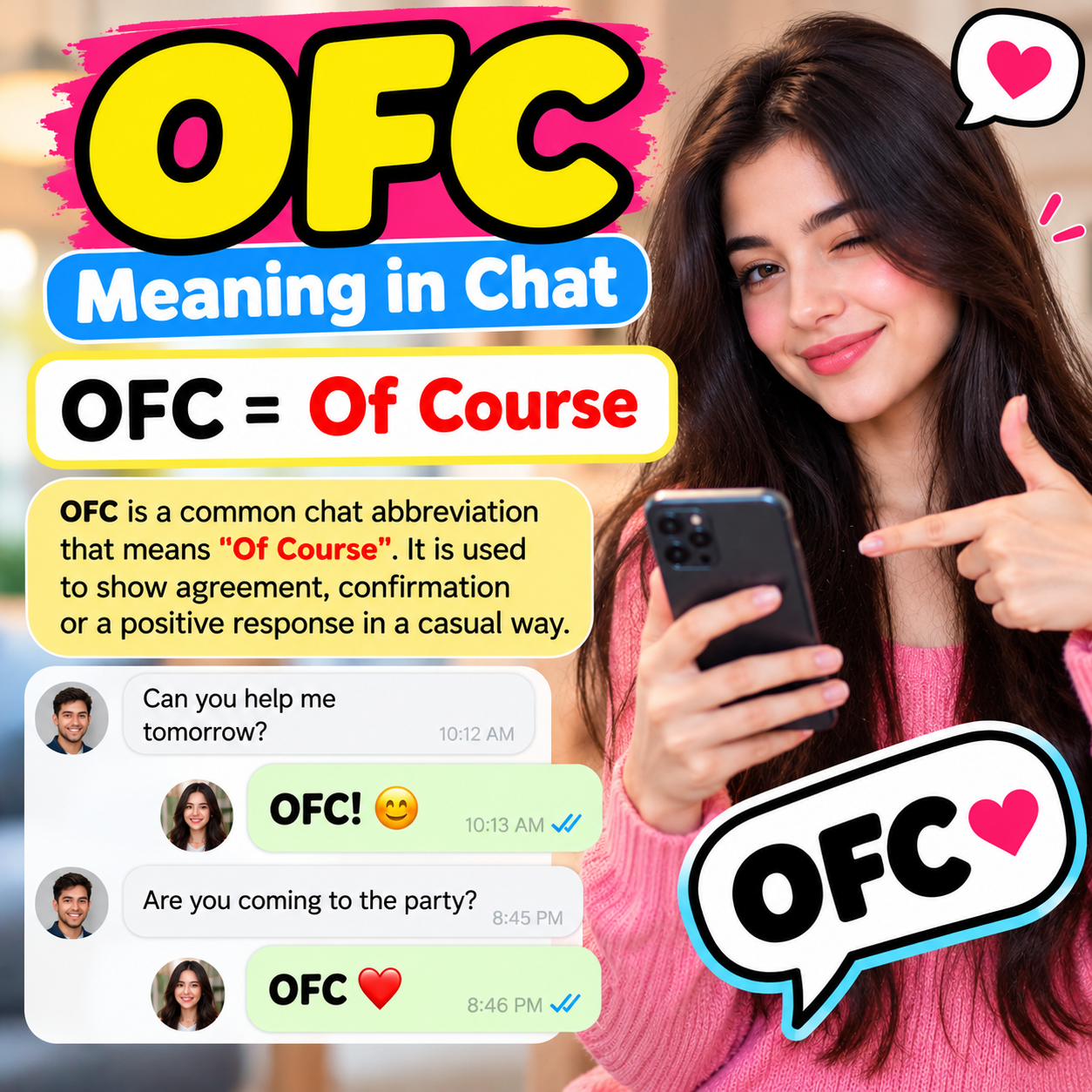
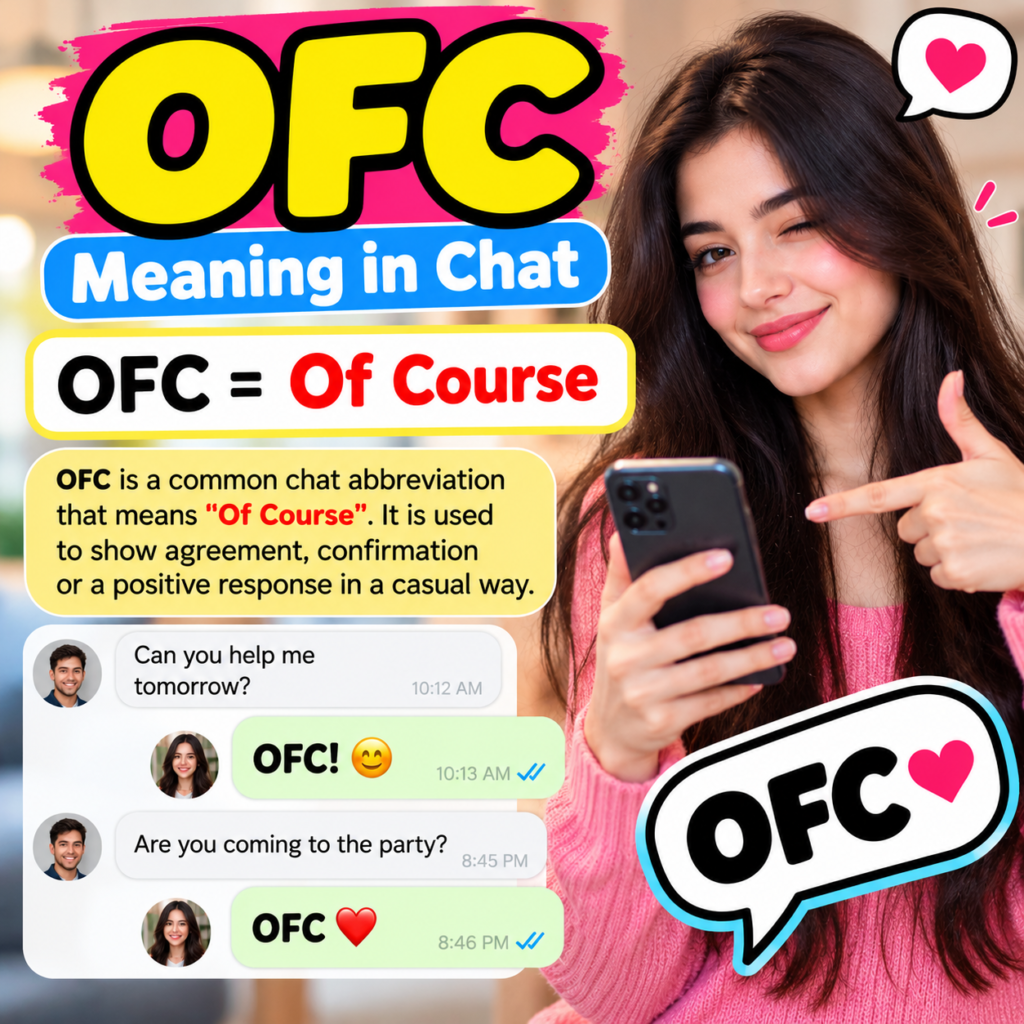
In text messages and social media chats, OFC stands for “Of Course.” It is a popular shorthand used across SMS, WhatsApp, Instagram, Snapchat, and TikTok to express immediate agreement, reassurance, or emphasis without typing out full words.
When people search for text abbreviations online, they often run into messy, disorganized lists that fail to explain tone, context, or social nuances. A plain list of acronyms won’t help you understand whether a phrase sounds natural, overly formal, or rude. Mastering digital communication—much like choosing a standout brand name—requires understanding exact meaning, tone, and audience context.
Whether you’re trying to decode a message from a friend, streamline your daily digital communications, or build a relatable social media voice for a modern audience, knowing how internet slang works is essential.
Modern Text Slang Categories & Examples
To help you navigate digital shorthand quickly, here is a breakdown of popular chat abbreviations grouped by communication style, including their meanings, tone/vibe, and best usage scenarios:
1. Daily Affirmations & Quick Agreement
- OFC | Of course / Obviously | Best for expressing quick agreement or reassuring someone without adding friction.
- IKR | I know, right? | Best for validating shared opinions or feelings effortlessly.
- FR | For real | Best for emphasizing truthfulness or total agreement.
- TBH | To be honest | Best for sharing a candid thought or softer opinion.
2. Conversational & Casual Transitions
- NVM | Never mind | Best for dropping an unimportant topic or clearing up a misunderstanding.
- IDK | I don’t know | Best for indicating uncertainty in informal settings.
- BTW | By the way | Best for introducing fresh context or tangential thoughts gently.
- IMO / IMHO | In my opinion / In my humble opinion | Best for offering personal perspective without sounding pushy.
3. Reaction & Emphasis Slang
- NGL | Not gonna lie | Best for sharing an unexpectedly honest or surprising perspective.
- SMH | Shaking my head | Best for showing mild disappointment, disbelief, or humor.
- IYKYK | If you know, you know | Best for inside jokes or niche references that target specific audiences.
Linguistic & Naming Psychology Breakdown
Why do short abbreviations like OFC and other popular text abbreviations resonate so powerfully across modern messaging platforms?
Phonetic Friction & Typing Speed
Typing “of course” requires nine keystrokes including the space bar. “OFC” reduces that to three rapid taps. Phonetically, “OFC” represents a natural compression of consonant sounds (O – F – C) that your mind processes instantly as a single fluid thought.
Psychological Warmth & Reassurance
In casual texting, full sentences with strict punctuation can sometimes read as cold, passive-aggressive, or overly formal. Responding with a quick “ofc!” conveys enthusiasm, warmth, and immediate validation. It signals to the recipient that their request or statement requires zero hesitation or friction.
Comparison & Meaning Matrix
| Abbreviation | Full Meaning | Vibe & Emotional Tone | Primary Context |
| OFC | Of course | Warm, agreeable, enthusiastic | Reassuring friends, confirming plans, informal team chats |
| OFCC | Of course, of course (emphatic) | Extra supportive, playful | Heavy emphasis, double reassurance |
| FR | For real | Authentic, serious, grounded | Agreement, verifying facts |
| TBH | To be honest | Candid, friendly, open | Personal opinions, casual feedback |
| NGL | Not gonna lie | Real, slightly vulnerable | Sharing hot takes, admission |
Common Pitfalls When Using Chat Slang
Even straightforward abbreviations can create confusion if used in the wrong context. Here are three common traps to avoid:
- Case-Sensitivity Misunderstandings: Typing “OFC” in ALL CAPS can sometimes feel like shouting if the rest of your message is lowercase. Lowercase “ofc” feels softer and more conversational in everyday texting.
- Context Overreach: Using slang like “ofc” or other informal chat abbreviations in high-stakes professional emails, legal documents, or formal client communications can damage your credibility. Keep it to casual team chats (Slack, Teams) or informal customer support interactions where appropriate.
- Overuse Fatigue: Dropping three or four acronyms into a single sentence (
"ofc fr ngl idk") dilutes your message and makes your text harder to read.
Strategic Selection Framework: Choosing the Right Tone
To ensure your communication always hits the mark, use this three-step filter before sending shorthand in chats or brand messaging:
[ Assess Audience ] ➔ [ Determine Formality Level ] ➔ [ Select Matching Abbreviation ]
- Assess Your Audience: Are you texting a close friend, a peer colleague, or a customer? If the relationship relies on strict professionalism, type out “of course.”
- Determine Formality Level: Informal messaging channels (Slack, WhatsApp, DMs) naturally welcome “ofc.” Formal channels (emails, proposals) demand written-out words.
- Check for Clarity: Ensure the recipient won’t confuse your acronym for another niche term (e.g., confusing “OFC” with financial or industry-specific jargon).
Frequently Asked Questions
What does OFC stand for in text messages?
In text messages and social media, OFC stands for “Of Course.” It is used as a fast, friendly way to say yes, agree with someone, or reassure them.
Can OFC mean anything else?
While “Of Course” is the dominant meaning in chat slang, in specific industries OFC can stand for Optical Fiber Cable (telecommunications) or Official Fan Club (entertainment). Context always dictates the true meaning.
Is OFC rude or informal?
OFC is not rude, but it is distinctly informal. It conveys a relaxed, casual tone that works well in personal texts and casual team chats, but should be avoided in formal business correspondence.
