


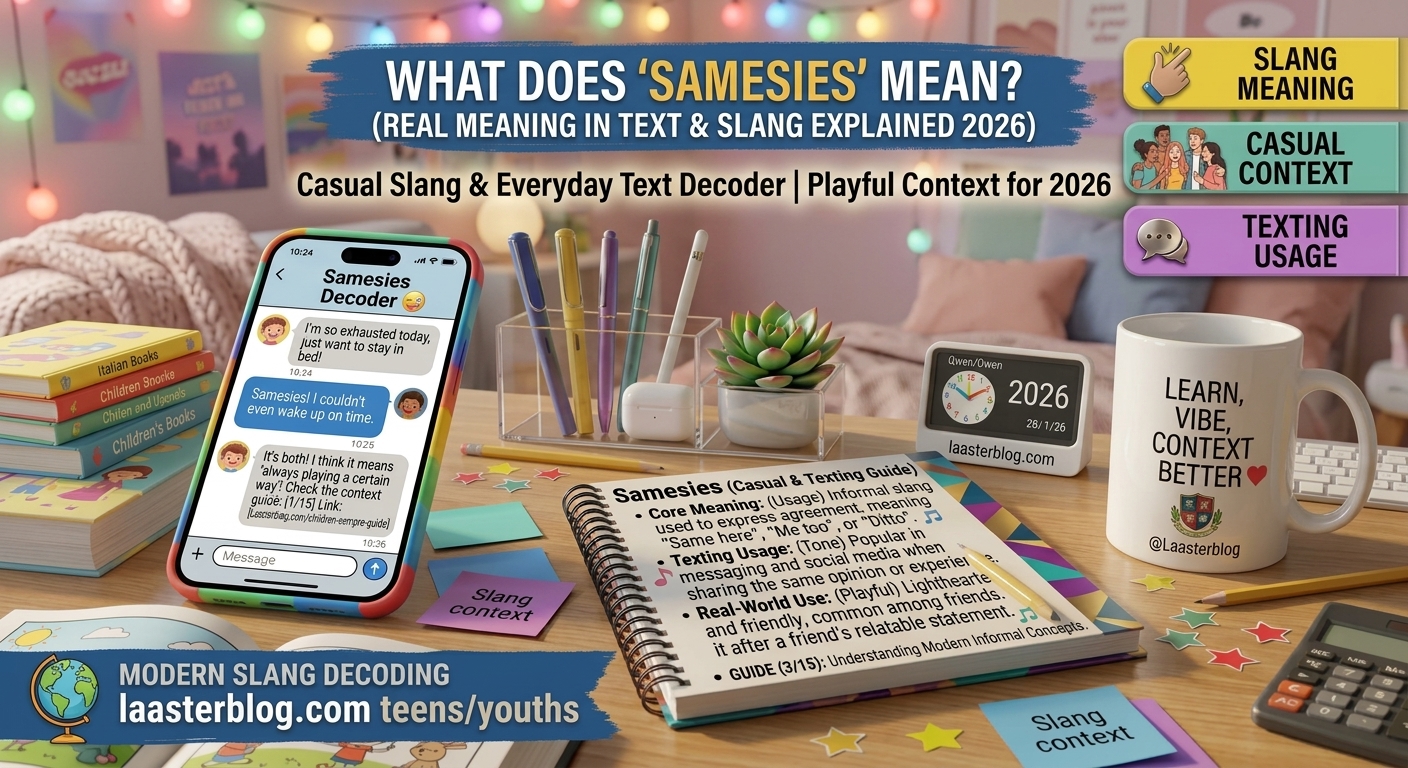
Samesies is an informal, playful slang term that means “same here,” “me too,” or “I agree.” It is used in texting and casual speech to express agreement, shared feelings, or identical experiences in a lighthearted, cute, or slightly humorous way.
What Does Samesies Mean in Text & Chat?
When someone types samesies in a text or chat, they are enthusiastically agreeing with what you just said. It functions as a playful synonym for “ditto” or “same,” instantly signaling that the sender shares your opinion, current state, or situation.
Depending on how it is used in conversation, samesies carries a few light tones:
- Relatable Agreement: Echoing someone’s mood, fatigue, or plans (“I need a nap” / “Samesies”).
- Playful bonding: Creating a quick moment of connection over a shared habit or preference (“I ordered iced coffee again” / “Samesies!”).
- Self-Deprecating Humor: Joining in on a joke about a shared struggle or minor mistake (“I have no idea what I’m doing” / “Samesies, honestly”).
Straightforward, no confusion there. It simply takes a basic agreement like “me too” and softens it into something casual and upbeat.
What Does Samesies Mean From a Guy vs. a Girl?
While the word means “me too” regardless of who types it, the context and subtext can shift depending on the sender and your relationship dynamic.
When a Girl Texts Samesies
Women frequently use samesies to express warm empathy, playful solidarity, or shared excitement with friends and partners.
- Subtext: Warm agreement, enthusiasm, or casual bonding.
- Example: “I’m literally counting down the minutes until the weekend.” “Samesies! 🎉”
When a Guy Texts Samesies
When guys text samesies, it is almost always intentional humor, light banter, or a sarcastic, tongue-in-cheek reaction to break up formal texting.
- Subtext: Playful banter, ironic humor, or intentionally cute agreement.
- Example: “I just ate an entire pizza by myself.” “Samesies, no regrets.”
| Aspect | Details |
|---|---|
| Primary Meaning | Same here / Me too / Ditto |
| Full Form / Root Word | Derived from the word “Same” with a diminutivizing suffix |
| Short Meaning | Mutual agreement or shared situation |
| Common Tone | Casual, playful, cute, humorous, informal |
| Suitable For | Friends, family, casual acquaintances, social media comments |
| Not Suitable For | Professional emails, formal work meetings, official documents |
Origin, History & Evolution of Samesies
The word samesies evolved as part of early 2000s American colloquial slang. It gained widespread popularity through youth culture, romantic comedies, and television sitcoms that popularized adding diminutive endings (like “-sies”) to basic words to make them sound cute or childlike (similar to twinsies or backsies).
With the rise of SMS texting, instant messaging, and social media in the 2010s, samesies became a permanent fixture in modern digital slang. Over time, its usage shifted from purely childish or overly cute speech into a universally understood, slightly sarcastic or lighthearted way to express agreement online.
Usage Across Social Media Platforms
Here’s how samesies shows up across different messaging apps and platforms today:
- iMessage & WhatsApp: Used as a quick, single-word reply in group chats or one-on-one messages to acknowledge shared feelings.
- TikTok & Instagram: Frequently appears in comment sections under relatable memes or relatable video posts where viewers feel the exact same way.
- Snapchat: Added as text overlays on photos depicting similar outfits, food, or lazy weekend activities.
- X (Twitter): Used in quote tweets or replies when agreeing with a hot take or relatable observation.
Real Chat Examples & Real-World Scenarios
Here is how samesies sounds in everyday messaging:
Scenario 1: Sharing a Mood
Friend A: I am so exhausted today and I haven’t even left the couch.
Friend B: Samesies 😴
Scenario 2: Food & Lifestyle Choices
Friend A: I ended up buying those sneakers we saw yesterday!
Friend B: Omgg samesies! What color did you get?
Scenario 3: Casual Work Banter (Between Work Friends)
Coworker A: I’m pretend-working until 5 PM today.
Coworker B: Haha samesies, don’t tell the boss.
Common Confusions, Mistakes & Wrong Interpretations
Here’s what most people miss: samesies is strictly informal slang, so context matters when choosing to use it.
- Literal vs. Sarcastic Usage: While usually sincere, people sometimes use samesies ironically to mock someone who is stating something overly obvious.
- Professional Missteps: Using samesies in a corporate email or with a client can come across as unprofessional or overly familiar.
- Confusing with Acronyms: Samesies is not an acronym or abbreviation; it is a full slang word created by extending “same.”
Similar Terms, Alternatives & Cleaner Substitutes
Depending on who you are talking to, you can swap samesies for other casual or professional terms:
Casual & Slang Alternatives
- Ditto: Classic, timeless way to say “me too.”
- Same: Short, punchy, and modern.
- Twinsies: Used when two people accidentally do, wear, or buy the exact same thing.
- Mood / Real: Popular Gen Z terms expressing deep agreement.
Formal & Professional Substitutes
- I agree: Standard professional agreement.
- Likewise: A polished, formal equivalent to “same here.”
- I feel the same way: A warm, respectful phrase for business or academic settings.
How to Reply When Someone Uses Samesies
When someone texts you samesies, the conversation is usually light and friendly. Here are a few ways to keep it going:
- Playful / Casual: “Great minds think alike!” or “Haha I knew it!”
- Supportive: “Glad I’m not the only one!”
- Emoji Reaction: Simply react with a laughing 😂, handshake 🤝, or heart ❤️ emoji.
Is Samesies Still Popular?
Yes. While samesies peaked in mainstream television and pop culture during the 2000s and 2010s, it has maintained steady staying power in casual internet vocabulary. It remains popular among Millennials and Gen Z as a staple of conversational texting and ironic humor.
Conclusion & Final Takeaway
The main rule to remember is simple: Samesies just means “same here” or “me too.” Keep it in your casual chats, group texts, and social media replies, and save the formal “likewise” for your work inbox.
