


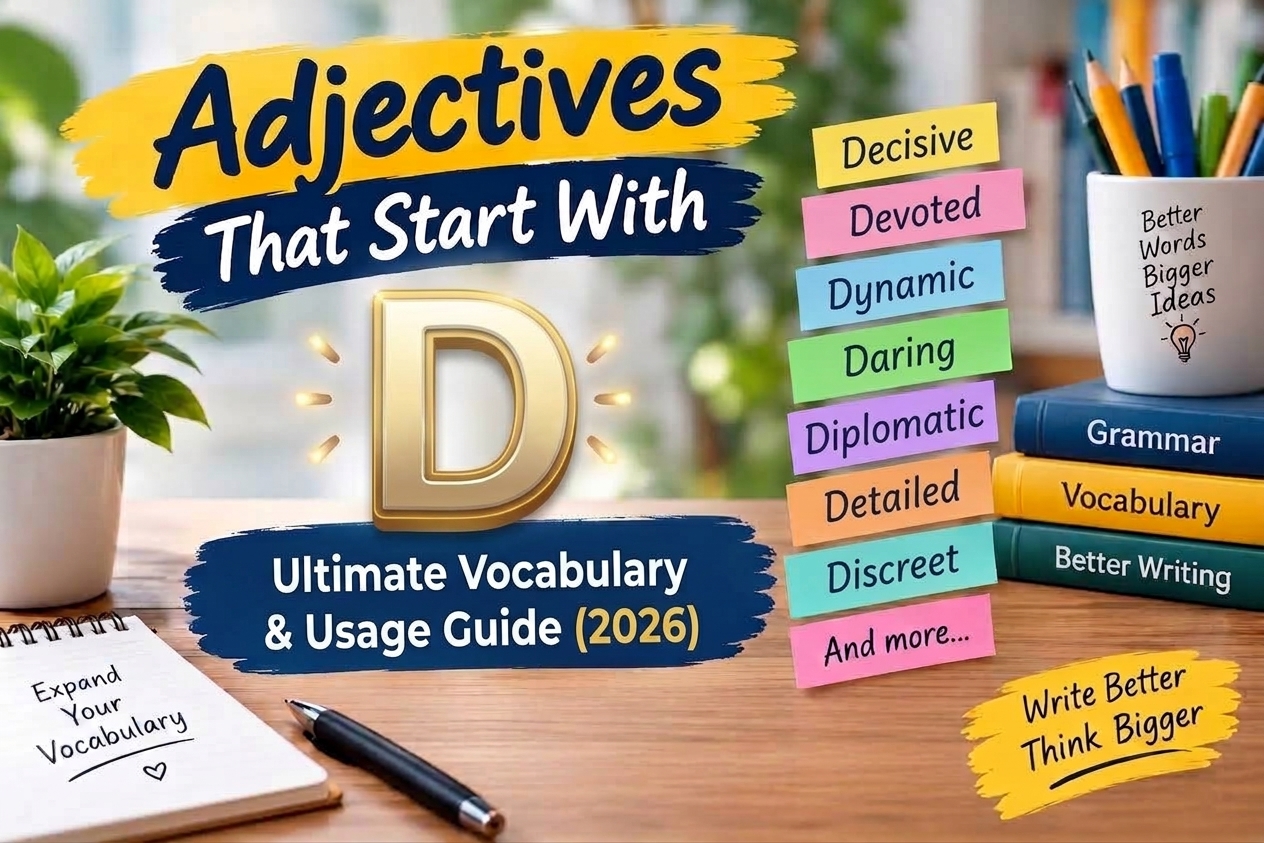
Adjectives that start with the letter D describe qualities, physical traits, personality types, and states of being ranging from positive (delightful, dynamic) to negative (damaging, dismal). These descriptors expand your vocabulary, elevate written communication, and add precision to conversational English, formal writing, and digital text messaging.
What Do “D” Adjectives Mean in Modern Text & Communication?
In modern text and casual communication, adjectives starting with D shape the tone, mood, and emotional weight of a message. Words like dazzling, dramatic, or dubious instantly tell the reader how to feel about a situation, person, or idea without requiring long explanations.
Using the right descriptor changes a bland observation into a vivid, high-engagement statement. For instance, calling a project “good” is forgettable, but labeling it definitive, dynamic, or daring gives your message clear, punchy authority.
Meaning & Vibe: Guy vs. Girl Context
The context and perception of certain D adjectives often shift depending on who is sending the message and the relationship between the speakers.
From a Guy
- Casual or Playful: Terms like dope, daring, or dynamic are frequently used to express strong approval, enthusiasm, or admiration for a shared moment or achievement.
- Direct or Guarded: Words like distant, defensive, or dry usually indicate a need for space, frustration, or a straightforward non-dramatic tone in text conversations.
From a Girl
- Expressive or Warm: Words like delightful, darling, dazzling, or divine add warmth, affection, or stylistic emphasis to everyday complimenting.
- Analytical or Nuanced: Words like dramatic, detailed, or discerning are often deployed to dissect social situations, describe personal tastes, or set clear boundaries.
Quick Reference Table
| Adjective | Primary Meaning / Category | Short Meaning | Common Tone | Suitable For | Not Suitable For |
| Dynamic | Characterized by constant change or activity | Energetic & adaptable | Positive / Professional | Business, resumes, praise | Describing slow processes |
| Delightful | Causing great pleasure or charm | Highly enjoyable | Warm / Friendly | Social posts, compliments | Serious or solemn contexts |
| Dubious | Hesitant, doubtful, or suspicious | Questionable | Critical / Skeptical | Reviews, debate, critique | Expressing certainty |
| Daring | Audacious and willing to take risks | Bold & adventurous | Admiring | Creative work, active feats | Safety protocols |
| Dismal | Depressing, dreary, or poor quality | Gloomy / Bad | Negative / Serious | Weather, bad results | Upbeat personal news |
| Diligence-based (Diligent) | Showing steady care and effort | Hardworking | Respectful | Academic, workplace reviews | Unplanned, casual activities |
Origin, History & Evolution
Most English adjectives starting with D trace their roots to Latin and Old French.
- Classical Roots: Words like divine (from Latin divinus) and diligence (from diligere, to love/select) originated in religious, scholarly, or legal texts during the Middle Ages.
- Shift to Everyday Vernacular: Over centuries, standard descriptors adapted into daily speech. During the 20th century, informal media popularized shorthand uses (e.g., dope evolving from slang to mainstream positive descriptor).
- Digital Evolution: In contemporary online culture, classic D adjectives are frequently paired with emojis or used in internet trends to summarize complex personalities or aesthetics instantly (e.g., describing an aesthetic as dramatic or dreamy).
Usage Across Social Media Platforms
- WhatsApp & SMS: Used in direct, concise messages to describe plans or express immediate reactions (e.g., “That food spot was delightful!” or “He seems a bit distant today.”).
- Instagram: Paired with imagery to set a aesthetic mood in captions (e.g., “Dreamy golden hour,” “Dazzling night out”).
- TikTok & Reels: Applied in video overlays and text trends to categorize personality archetypes or dramatic storytelling (e.g., “Main character energy: Daring vs. Delicate“).
- LinkedIn: Used strategically in professional summaries, accomplishments, and endorsements (e.g., “Demonstrated decisive leadership during company expansion”).

Real Chat Examples & Real-World Scenarios
Scenario 1: Planning an Event (Casual / Friendly)
Friend A: Are you coming to the rooftop setup tonight?
Friend B: Absolutely, it looks dazzling! Straightforward, no way I’m missing that.
Scenario 2: Project Feedback (Professional)
Manager: How did the client presentation go?
Colleague: It went great. They loved the detailed breakdown and called our strategy dynamic.
Common Confusions, Mistakes & Wrong Interpretations
- Literal vs. Figurative Usage: Misusing dramatic to mean “bad” rather than “intense or theatrical.”
- Similar-Sounding Words: Confusing discreet (judicious, quiet) with discrete (distinct, separate). Both are valid D adjectives, but they hold completely different meanings in writing.
- Overuse of Negative Descriptors: Terms like drab, dismal, or dire carry extreme weight; using them for minor inconveniences can distort your message tone.
Similar Terms, Alternatives & Cleaner Substitutes
Positive Alternatives
- Delightful $\rightarrow$ Charming, Pleasant, Wonderful
- Dynamic $\rightarrow$ Vibrant, Active, Energetic
- Dazzling $\rightarrow$ Radiant, Brilliant, Impressive
Professional Alternatives
- Diligent $\rightarrow$ Thorough, Conscientious, Attentive
- Decisive $\rightarrow$ Firm, Resolute, Action-oriented
- Definitive $\rightarrow$ Conclusive, Authoritative, Absolute
How to Reply When Someone Uses These Terms
When someone describes you or your work using a D adjective, tailor your response to match the tone:
- If praised as “Dynamic” or “Diligent” (Professional):“Thank you! I put a lot of effort into keeping things moving forward efficiently.”
- If complimented as “Dazzling” or “Delightful” (Playful/Warm):“That just made my day! Thanks for the sweet words.”
- If described as “Distant” or “Dry” (Constructive/Personal):“I appreciate you checking in. I’ve been a bit overwhelmed today, but I’m here now.”
Current Trends & Longevity
Adjectives starting with D remain fundamental build blocks of English vocabulary across writing, speech, and AI search indexing. While viral internet slang comes and goes, descriptive words grounded in precise meanings—like daring, dubious, definitive, and dazzling—maintain consistent search volume and high conversational relevance year after year.
Conclusion & Final Takeaway
Mastering adjectives that start with D allows you to tailor your tone with pinpoint precision—whether you are writing a resume, drafting a social media caption, or sending a quick text message.
The #1 rule to remember: Match the intensity of the adjective to the exact context of your conversation to keep your communication clear, compelling, and authentic.
