


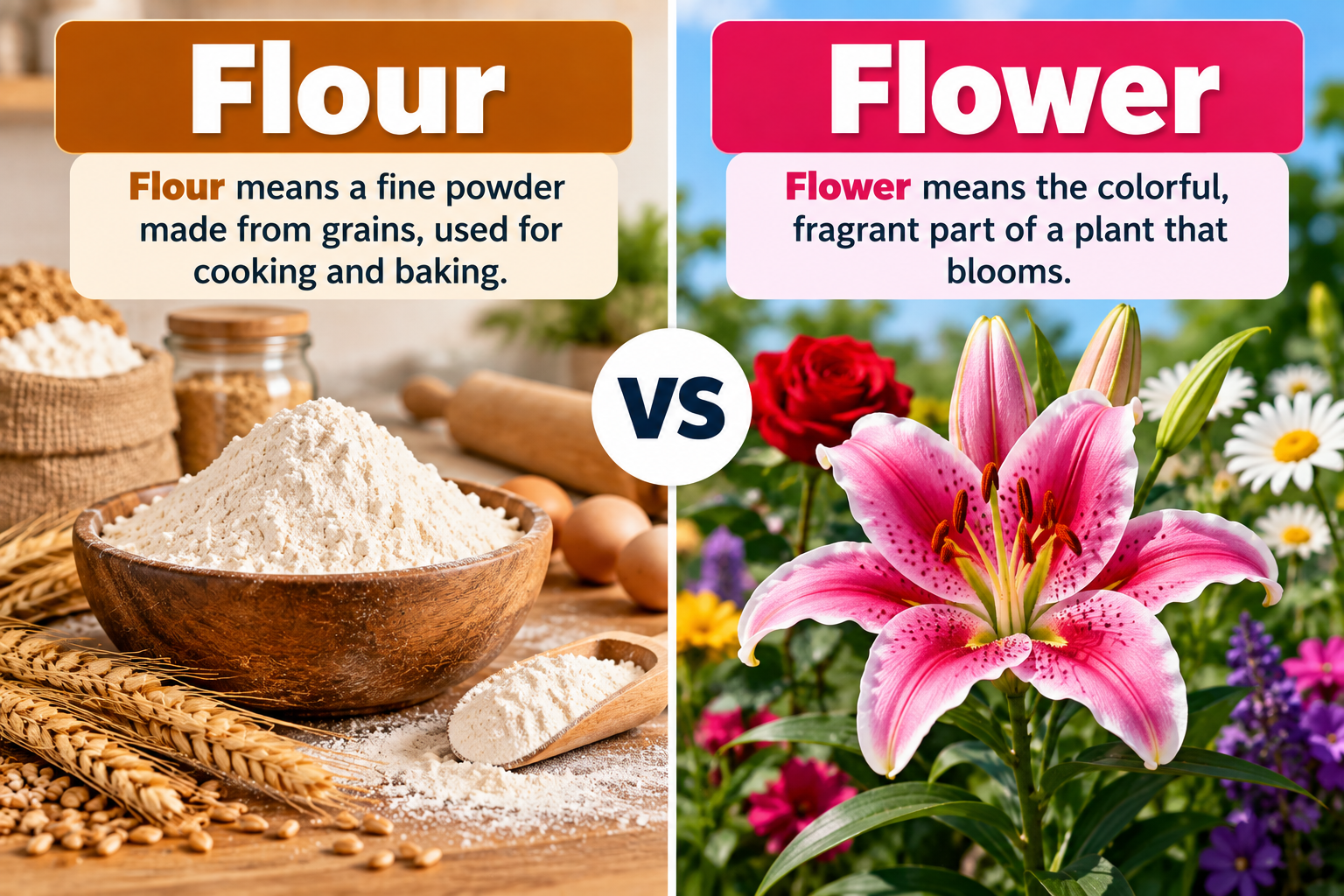
Flour or Flower—while pronounced identically as homophones, represent two vastly different psychological territories in brand architecture: standard utility and foundational growth (Flour) versus visual aesthetics, organic vitality, and sensory elegance (Flower). Selecting between these root concepts dictates your entire visual identity, target demographic, and market positioning from day one.
Most generic name generators fail because they ignore semantic intent and phonetic positioning. Choosing a brand identity requires balancing linguistic mechanics with naming strategy to build long-term brand equity.
Categorized Brand Name Concepts
Modern & Minimalist
- Flourish Studio | Evolution & Craft | Best For: Creative agencies, SaaS tools
- The Flour Lab | Raw Ingredients & Precision | Best For: Artisan bakeries, culinary tech
- Flowering Co. | Unfolding Potential | Best For: Modern wellness, boutique consultancies
- Flour & Form | Structure Meets Substance | Best For: Architecture, interior design
- Petal & Flour | Sensory Fusion | Best For: Hybrid cafes, lifestyle concepts
Aesthetic & Premium
- Maison de Fleur | Heritage Elegance | Best For: Luxury skincare, fragrance
- Wildflower Commerce | Organic Reach & Adaptability | Best For: E-commerce platforms, sustainable retail
- White Flour Atelier | Purity & Craftsmanship | Best For: High-end patisseries, culinary academies
- Fleuriste Digital | Curated Artistry | Best For: Design studios, luxury marketplaces
- Golden Flourish | Abundance & Quality | Best For: Premium food brands, boutique finance
Catchy & Disruptive
- Flour Power | Energy & Essential Utility | Best For: CPG brands, modern kitchens
- Flowerbox | Contained Vitality | Best For: Subscription boxes, gifting apps
- Outflourish | Performance & Growth | Best For: Marketing platforms, growth accelerators
- Bloom & Flour | The Complete Lifecycle | Best For: Farm-to-table restaurants, lifestyle apps
Linguistic & Naming Psychology Breakdown
Here is where most founders get it wrong: they choose based purely on visual appeal rather than auditory perception and cognitive association.
The word Flour triggers cognitive associations with substance, fundamental ingredients, transformation, and physical craft. Phonetically, it grounds the consumer. It implies that your product or service is an essential building block—the foundational element of a larger final result.
Conversely, Flower activates immediate sensory imagery, organic vitality, elegance, and emotional resonance. The soft “ow” sound paired with the liquid “r” creates a smooth auditory experience that feels accessible and inviting.
When consumers process these homophones visually, the distinction creates instant semantic framing:
- Flour communicates raw utility, process, hard work, and foundational strength.
- Flower communicates output, beauty, organic growth, and sensory delight.
Comparison & Meaning Matrix
| Name Concept | Core Vibe & Semantic Meaning | Ideal Industry / Brand Fit |
| Flourish Tech | Sustained growth, expansion, technical capability | Enterprise software, fintech platforms |
| Atelier Fleur | Handcrafted beauty, curated aesthetics, elegance | Luxury skincare, high-end apparel |
| The Flour Vault | Secured quality, foundational purity, tradition | Specialty food distribution, craft baking |
| Wildflower Labs | Uncapped potential, natural iteration, resilience | Biotech, sustainable consumer goods |
| Flour & Thread | Raw materials, tactile craft, structural utility | Lifestyle goods, artisanal home decor |
Common Pitfalls When Selecting Names
- Phonetic Friction: Because these terms are homophones, verbal word-of-mouth marketing can create confusion. If someone says your name out loud, will the listener know which spelling to type into their browser?
- Trademark Bottlenecks: Common dictionary terms face high saturation. Registering a trademark for a generic word without a distinctive modifier often leads to legal rejection.
- Scaling Limitations: Choosing a name tied too tightly to a single product line limits future expansion. A brand named “The Flour House” will struggle to pivot into non-culinary lifestyle goods.
- Domain Availability Hardstops: The exact-match
.comdomains for both words are long gone or held by domain investors for six figures. You need a strategy for prefix, suffix, or descriptive domain variations.
Strategic Selection Framework
- Test for Auditory Clarity: Say the name in a busy room. Ask ten people to write down what they hear without giving them visual context. If half write “Flour” and half write “Flower,” assess whether that ambiguity hurts your discoverability.
- Audit Semantic Fit: Align the root concept with your core product offering. Are you selling the raw foundation (Flour) or the polished, beautiful result (Flower)?
- Check Entity Separation: Search the proposed name on Google and social channels. Ensure you aren’t entering a crowded entity space where a dominant market player already owns the primary search intent.
- Secure Digital Footprint Options: If the core domain isn’t available, test high-value modifiers like Get[Name].com, Use[Name].com, or [Name]HQ.com before finalizing your choice.
Frequently Asked Questions
Which option works better for a modern tech startup?
Concepts derived from Flourish or Flower generally perform better in tech because they signal growth, scaling, and network effects. However, if your tech product serves as a foundational platform or backend API, leverage concepts around Flour to emphasize essential utility.
How do I handle domain availability issues with these keywords?
Avoid paying massive premiums for short dictionary domains early on. Pair the core root with an action verb or category descriptor (e.g., TryFlour.com or FlowerStudio.co) to secure a clean, brandable digital footprint without burning capital.
Are homophone names harder to rank on Google?
Google relies on contextual signals around your site to build entity understanding. As long as your site content, metadata, and off-page footprint clearly signal your industry niche, search engines easily distinguish between the two entities.
The 1-Rule Golden Takeaway
Match your name to your position in the value chain: use Flour if you provide the foundational input, and use Flower if you deliver the delightful output.
