


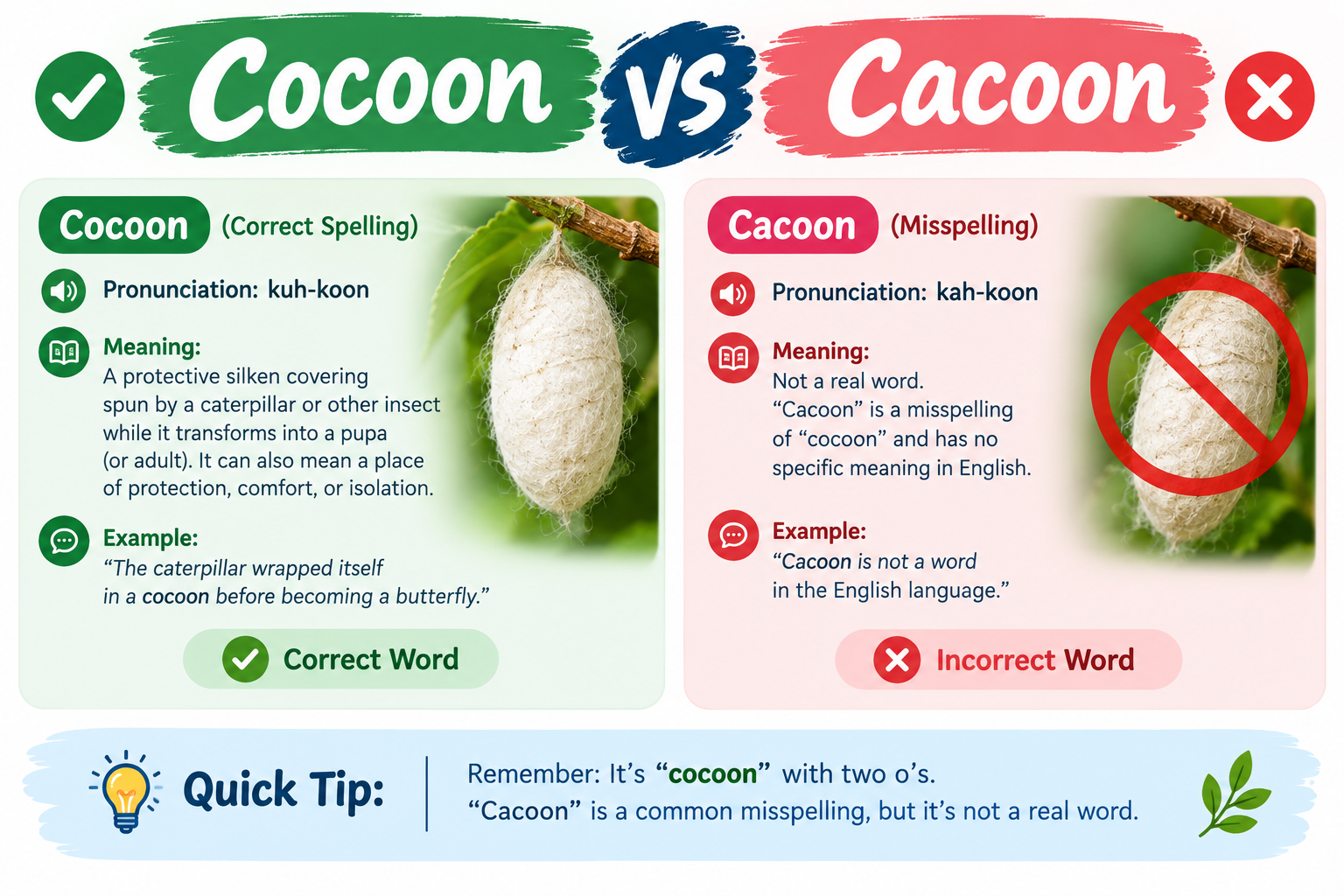
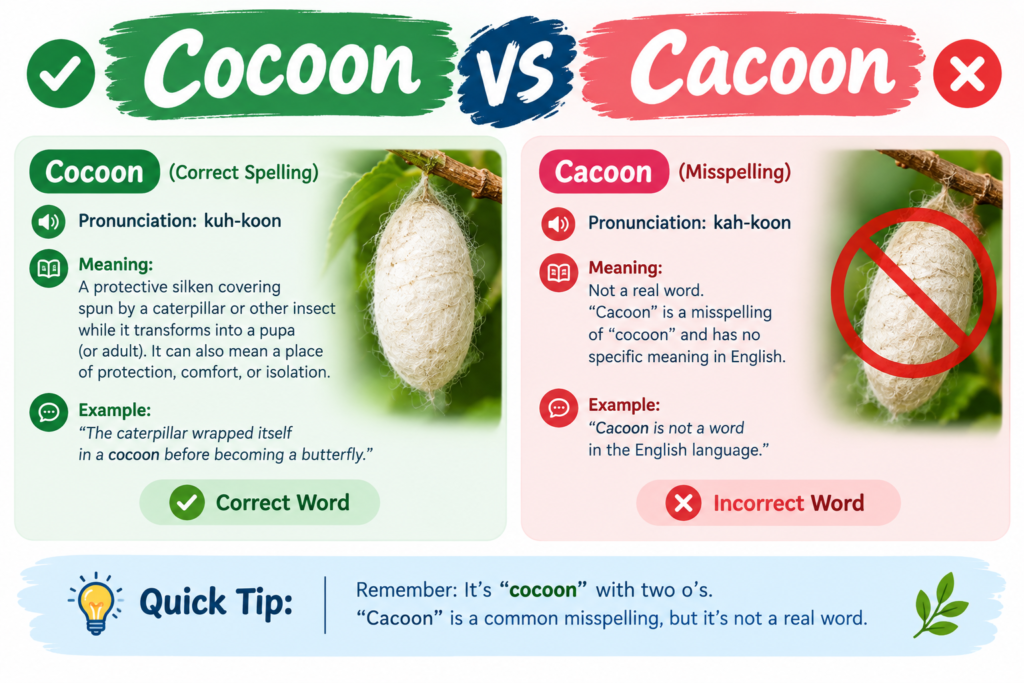
Cocoon is the only correct spelling in standard English for the protective silk casing spun by caterpillars and insects, or for feeling safe and snug. Cacoon is a common misspelling or a specialized brand name (such as Cacoon hammock chairs), but it is not a valid standard English word.
While cocoon refers primarily to biological silk coverings formed by moths and butterflies during metamorphosis, it has evolved into a popular lifestyle concept symbolizing cozy comfort, self-care, and mental recharge. In contrast, seeing cacoon in print almost always points to a typo, a brand title, or casual autocorrect confusion.
Here is the ultimate breakdown of Cocoon vs Cacoon, explaining spelling rules, metaphorical meanings in modern texting and social media, real chat examples, and how to avoid common mistakes.
What Does Cocoon vs Cacoon Mean in Text & Chat?
In everyday conversations and digital chats, cocoon is used both literally and metaphorically to describe wrapping oneself up in blankets, isolating from the outside world, or prioritizing self-care.
The Core Meaning and Intent
- Cocoon (Correct Word): Means creating a safe, comfortable, and warm environment. Used when someone is relaxing at home, taking a break from social interaction, or sleeping in.
- Cacoon (Misspelling / Brand): Refers strictly to hanging hammock tree tents or outdoor lounge swings sold under the brand name Cacoon. In regular grammar, it is an incorrect spelling.
Understanding the modern vibe behind the word helps you catch the subtext in texts:
- Literal Usage: Talking about insects, silk cocoons, or biology.
- Figurative / Slang Usage: “Cocooning” means hibernating at home with movies, cozy clothes, and snacks to recharge mental energy.
- Brand Usage: Referencing hanging outdoor nest chairs (“Cacoon chair”).
What Does Cocoon Mean From a Guy vs. a Girl?
When people text about “cocooning” or entering “cocoon mode,” the subtle subtext can shift depending on who sends the message:
When a Guy Texts About “Cocooning”
- Low-Key Resting: Guys often use it to signal they are turning off notifications, playing video games, or recovering after a workout or exhausting work week (e.g., “Going into full cocoon mode this weekend, catching up on sleep”).
- Direct Cozy Vibe: Sent as a low-pressure invitation to watch movies or hang out at home instead of going out to a bar or party.
When a Girl Texts About “Cocooning”
- Self-Care & Aesthetics: Girls frequently use “cocoon” to describe a complete reset—skincare routines, oversized hoodies, hot tea, and cozy blankets (e.g., “Blanket cocoon with hot cocoa tonight, do not disturb”).
- Social Battery Recharge: Used to decline social invitations politely without causing hurt feelings, signaling that their social battery is fully drained.
Quick Reference Table: Cocoon vs Cacoon
| Term | Full Form / Primary Meaning | Short Meaning | Common Tone | Suitable For | Not Suitable For |
| Cocoon | Protective silk casing spun by larvae; cozy isolation | Snug, cozy, safe space | Warm, Relaxed, Casual | Essays, Texting, Social Captions, Self-Care Posts | Formal business reprimands, emergency alerts |
| Cacoon | Brand name for hanging hammock lounges | Common typo for Cocoon | Unintentional / Brand-specific | Product listings for Cacoon chairs | Standard English writing, academic essays |
Origin, History & Evolution of Cocoon
The word cocoon has a long linguistic history that spans centuries of science and culture:
The History and Evolution of “Cocoon”
1500s–1600s: French and Provençal Roots
The word “cocoon” developed from French and related Romance-language forms associated with a shell or protective covering. Its history is linked to words such as French “coque” and Provençal “cocon.”
Etymology & Origins1700s–1800s: Scientific Usage
“Cocoon” became established in English for the protective silk covering spun by silkworms and other insect larvae as they develop into their next life stage.
Entomology & Nature1980s: The Rise of “Cocooning”
Trend forecaster Faith Popcorn popularized “cocooning” to describe a growing tendency to retreat into the comfort and security of home. The term became associated with lifestyle and consumer trends.
Lifestyle & Pop Culture2020s–2026: Cozy Culture & Self-Care
In modern online conversations, “cocooning” can describe creating a cozy personal space, taking a break from social demands, recovering from burnout, or focusing on rest and self-care.
Digital Culture & Wellness- Etymological Roots: The term entered French as cocon (derived from coque, meaning shell) before migrating into English during the 18th century as a biological term for insect pupa cases.
- The 1980s Pop Culture Shift: In 1981, trend forecaster Faith Popcorn coined the term “cocooning” to describe the cultural movement of individuals staying inside their homes to retreat from harsh outer reality.
- Digital Age Vibe: Today on TikTok, Instagram, and WhatsApp, “cocooning” sits right alongside cozy winter aesthetics, mental health days, and low-key weekend plans.
Usage Across Social Media Platforms
Here is how cocoon (and occasionally the typo cacoon) appears across popular social platforms:
- WhatsApp & iMessage: Used in group chats to explain why someone is turning down late-night plans (e.g., “Can’t make it tonight, I’m wrapped in my blanket cocoon”).
- Instagram & TikTok: Featured in winter or rainy-day photo dumps, cozy bedroom aesthetics, and outfit videos with hashtags like
#cocooning,#blanketcocoon, or#cozyvibes. - Snapchat: Used in cozy bed snaps or movie night updates to show friends a quiet night in.
- Pinterest: Frequently used for home decor pins, oversized knit sweaters, and hanging lounge chairs (where Cacoon hammock searches often pop up).
Real Chat Examples & Real-World Scenarios
Here are three realistic dialogue examples showing how the term works in everyday texting:
Example 1: Friends Making Weekend Plans
Taylor: Are you coming out to the rooftop party tonight?
Sam: No way, I’ve had the craziest week! I am currently in a blanket cocoon with takeout.
Taylor: Fair enough! Enjoy the reset!
Example 2: Shopping / Typo Correction
Jordan: Look at this hanging cacoon swing chair for the backyard!
Alex: Oh wow, that looks so comfortable! FYI it’s spelled Cocoon unless you’re searching for that specific brand line.
Jordan: Haha true, auto-correct didn’t catch it!
Example 3: Dating / Casual Hangout
Chris: Want to grab dinner out or just order in?
Morgan: Let’s order pizza and cocoon on the couch with a movie.
Chris: Perfect, sound like a plan!
Common Confusions, Mistakes & Wrong Interpretations
Avoid these frequent slip-ups when typing or writing about cocoons:
- Spelling Mistake (“Cacoon”): Substituting the first O with an A is the #1 mistake. Remember: C-O-C-O-O-N has three Os and zero As.
- Confusing Cocoon with Chrysalis:
- Cocoon: Made of silk spun around the pupa (mostly moths).
- Chrysalis: The hard, bare skin formed directly by a butterfly pupa without a silk wrapping.
- Overusing in Formal Contexts: While “cocooning” works well in casual texts and lifestyle blogs, using it in formal corporate communication might sound overly informal compared to phrases like “resting” or “working remotely.”
Similar Terms, Alternatives & Cleaner Substitutes
If you want to vary your vocabulary or use clearer phrasing, consider these alternatives:
Casual & Slang Synonyms
- Nesting: Staying inside to make your space cozy and warm.
- Hibernating: Hiding away from the cold or social events during winter.
- Cozying up: Snuggling with blankets, pillows, or loved ones.
- Binging / Unplugging: Disconnecting from digital noise inside a quiet space.
Professional / Clean Substitutes
- Sheltered environment: Formal term for a safe, protected setting.
- Resting / Recharging: Standard language for personal recovery time.
- Protective casing: Accurate scientific term for biological cocoons.
How to Reply When Someone Mentions “Cocooning”
When a friend or partner texts you that they are in “cocoon mode,” here are easy ways to reply:
1. Supportive / Understanding Replies
- “Rest up! You definitely earned a cozy night in.”
- “Enjoy your cocoon time, catch you tomorrow!”
- “Zero blame! Drink some tea and enjoy the quiet.”
2. Playful / Casual Replies
- “Don’t forget to emerge as a majestic butterfly tomorrow!”
- “Pass the snacks into the cocoon please!”
- “Sounds like the ultimate Friday night plan honestly.”
Is Cocoon Still Popular? (Current Trends & Longevity)
Yes! The word cocoon maintains massive relevance in both everyday language and search engine trends.
Driven by the popularization of self-care culture, work-from-home lifestyles, and cozy aesthetics across social media platforms, “cocooning” has cemented its place in modern vocabulary. It isn’t a passing internet fad—it is an established English word with a modern lifestyle twist that isn’t going anywhere.
Conclusion & Final Takeaway
The rule to remember is simple: Cocoon is the correct English spelling for both the biological silk shell and the cozy feeling of wrapping up at home. Cacoon is a common misspelling or a trademarked brand for outdoor hanging loungers.
When you want to text about relaxing, snuggling under heavy blankets, or taking a break from the world, always stick with Cocoon!
FAQ Section
What is the correct spelling, Cocoon or Cacoon?
The correct spelling in standard English is Cocoon (with two ‘o’s in the middle). “Cacoon” is a misspelling or a specific brand name for hanging tree chairs.
Is a cocoon made by a butterfly or a moth?
Cocoons are made primarily by moth caterpillars using spun silk. Butterflies generally form a hard pupa casing known as a chrysalis, not a silk cocoon.
What does “cocooning” mean in lifestyle slang?
In modern slang and lifestyle culture, cocooning means staying indoors in a cozy, comfortable environment to relax, recharge, and practice self-care away from social stress.
