


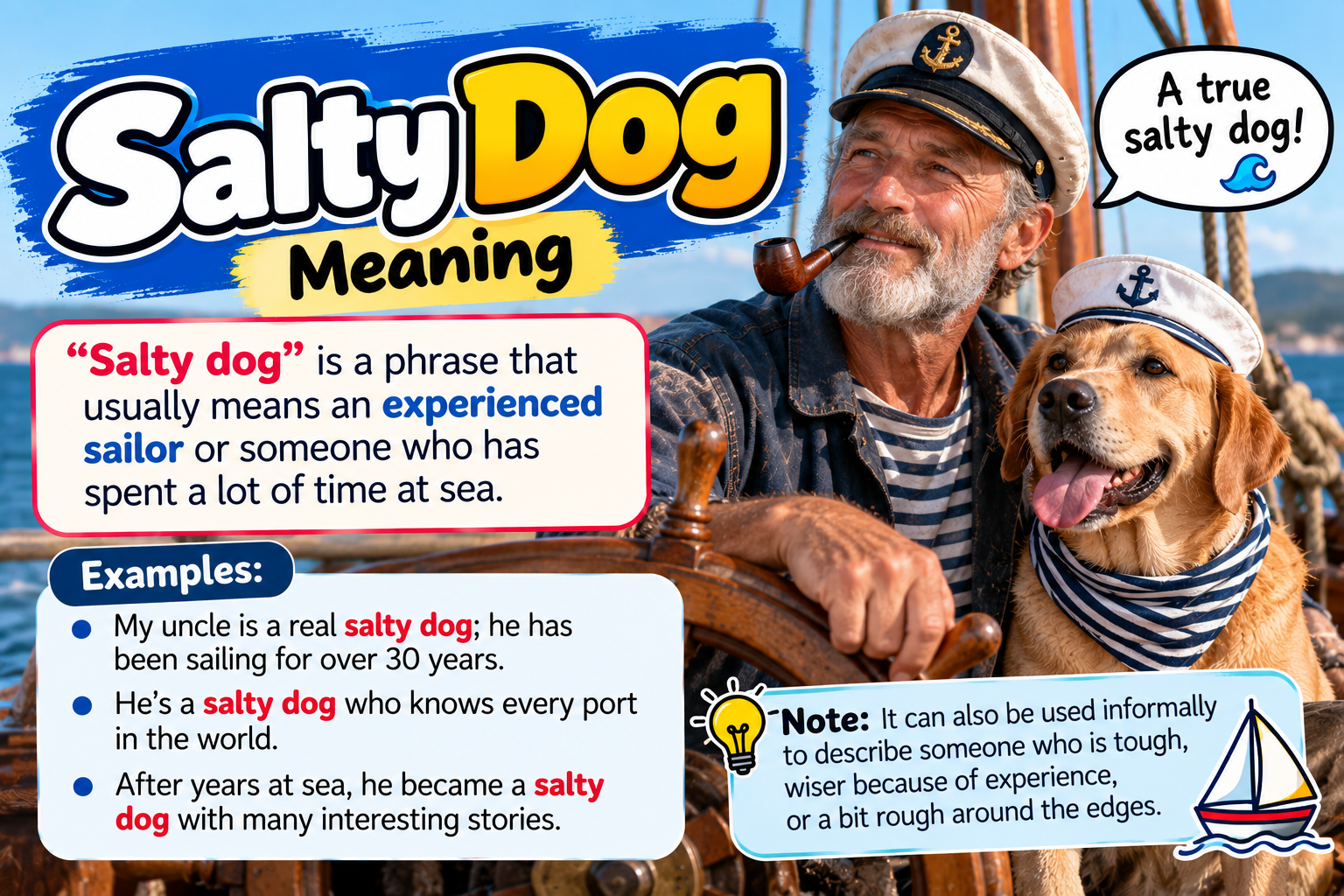
A salty dog refers to an experienced, tough sailor who has spent years at sea, earned through relentless exposure to ocean salt, harsh winds, and grueling maritime life. In modern slang and branding, it describes a resilient, rugged, and authentic individual or identity that remains unfazed by challenges.
Most generic name lists give you surface-level terms without explaining the cultural weight behind them. If you are building an authentic brand or searching for a punchy identity, understanding the deep roots of salty dog terms ensures your positioning feels earned rather than forced.
Let’s break down the exact meanings, cultural categories, and strategic uses behind this iconic phrase.
Categorized Salty Dog Terms and Brand Identifiers
Understanding the salty dog meaning requires looking at how nautical slang evolves into distinct brand personalities and aesthetic styles.
Modern & Rugged
- Sea Salt: Crisp, raw ocean heritage | Best for coastal lifestyle apparel and grooming.
- Mariner Prime: Authoritative maritime strength | Best for logistics, supply chain, and durable goods.
- Iron Deck: Unshakeable durability and grit | Best for fitness brands, workwear, and outdoor gear.
Aesthetic & Nautical
- Old Salt: Time-tested wisdom and storytelling | Best for craft distilleries, pubs, and heritage labels.
- Blue Water: Deep-sea adventure and freedom | Best for yacht chartering, travel agencies, and resort wear.
- Brine & Line: Authentic coastal craftsmanship | Best for seafood restaurants and artisanal goods.
Professional & Coastal
- Anchor & Helm: Stability, guidance, and leadership | Best for wealth management and strategic consulting.
- Captains Log: Methodical, transparent tracking | Best for SaaS platforms and project management tools.
- Tide Line: Dynamic balance and natural flow | Best for environmental consultancies and sustainable brands.
Linguistic & Naming Psychology Breakdown
Why does the phrase salty dog resonate so strongly across maritime history, pop culture, and modern branding?
It comes down to tactile phonetics and sensory imagery. The word “salty” immediately invokes physical elements—ocean spray, sweat, hard labor, and resilience. Pairing it with “dog” adds an unpretentious, loyal, and gritty human element. Phonetically, the hard consonant sounds (S, T, D, G) create a crisp, memorable bite that registers instantly in spoken conversation.
When using salty dog terms for branding, you tap into emotional triggers of authenticity and battle-tested endurance. Consumers subconsciously link the name to someone who has “been through the storm” and emerged reliable.
Comparison & Meaning Matrix
| Term / Variant | Core Meaning & Vibe | Ideal Industry / Brand Fit |
| Salty Dog | Experienced, weathered, resilient, unpretentious | Craft spirits, pub concepts, rugged gear |
| Old Salt | Wise, storytelling sailor with decades of experience | Publishing, heritage footwear, barbershops |
| Sea Dog | Adventurous, slightly rebellious ocean veteran | Outdoor recreation, rum distilleries, marine hardware |
| Salty | Sharp, sarcastic, or seasoned with attitude | Streetwear, bold beverage brands, podcast titles |
Common Pitfalls When Selecting Nautical Names
- Overcomplicating the Pronunciation: Choosing obscure Old English maritime terms creates unnecessary friction for your customers. Keep it punchy.
- Ignoring Trademark Bottlenecks: Popular terms like salty dog are heavily used in hospitality and beverage sectors. Always perform a thorough legal search before committing.
- Scaling Limitations: Naming your business strictly after a niche ocean term can restrict you if you expand into non-coastal markets.
- Leaning into Cliché: Avoid combining overused tropes like “Anchor,” “Pirate,” or “Compass” unless you have a truly unique brand story to back it up.
Strategic Selection Framework
- Define Your Grit Index: Decide whether your brand leans toward refined coastal elegance (blue water) or raw, rugged authenticity (iron deck).
- Filter by Phonetic Clarity: Say the name out loud ten times. It should flow effortlessly without tripping the tongue.
- Test Foreign Markets: Ensure your selected salty dog terms do not translate awkwardly or hold negative connotations in target global markets.
- Verify Digital Footprints: Check domain availability (.com prioritized) and secure social handles across all primary platforms.
Frequently Asked Questions
What is the original origin of the term salty dog?
The phrase originated in 19th-century maritime culture. Sailors who spent long periods at sea literally accumulated salt spray on their skin, hair, and clothes, becoming “salty.” The word “dog” was a common colloquialism for a worker or chap, creating a term for a seasoned sailor.
Is “salty dog” an insult or a compliment?
In traditional nautical and informal contexts, it is a compliment signifying experience, tough character, and reliability under pressure. However, in modern slang, “salty” on its own can mean bitter or agitated, so context matters.
How are salty dog terms used in modern cocktail culture?
A “Salty Dog” is also a famous classic cocktail made with gin or vodka, grapefruit juice, and a salted rim. Its sharp, crisp profile mirrors the rugged, ocean-inspired name.
The 1-Rule Golden Takeaway
An authentic name isn’t just a label—it’s a promise of character; choose a term that carries real weight and back it up with unshakeable performance.
