


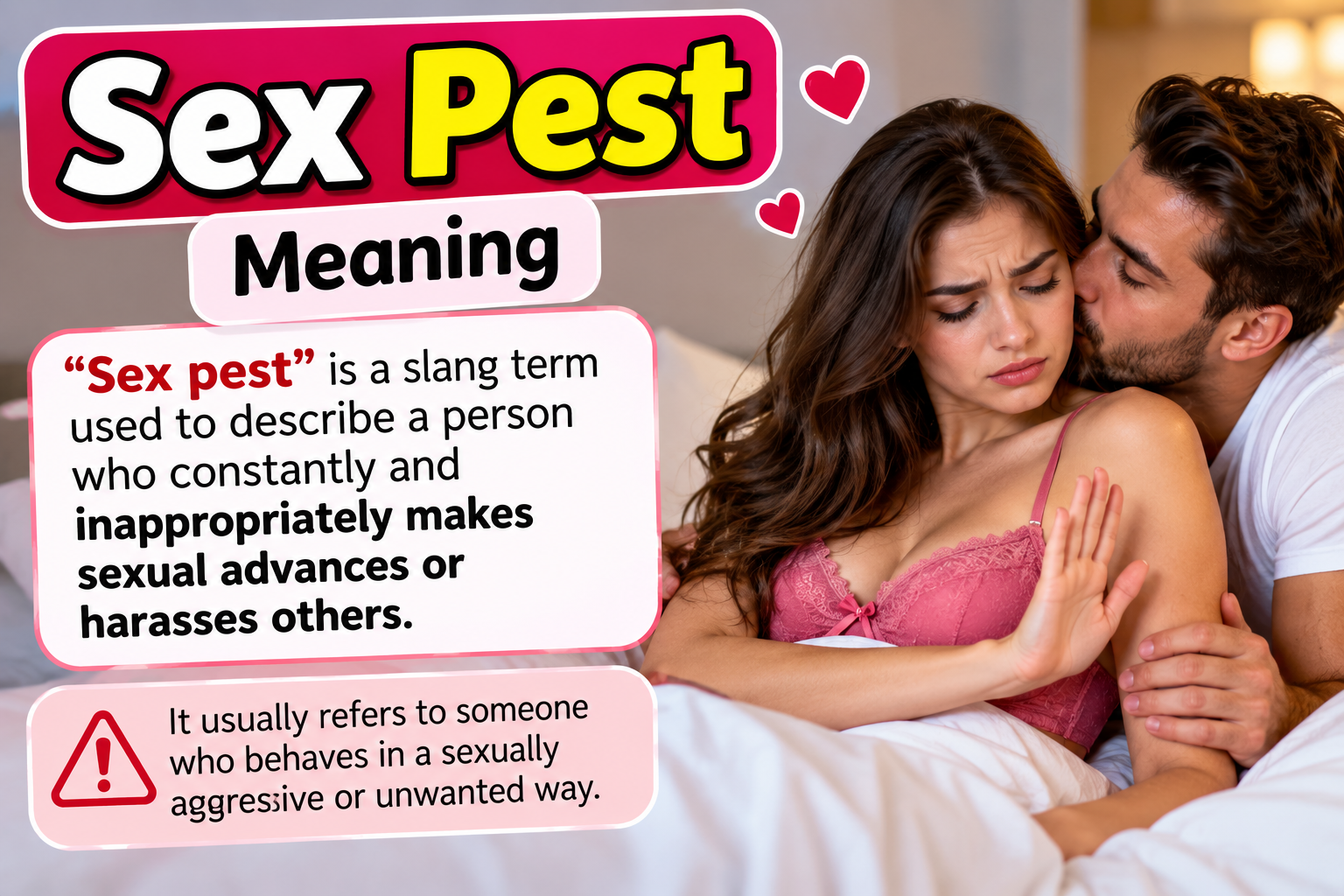
A sex pest is an individual who persistently engages in unwanted sexual harassment, unwanted physical advances, or inappropriate sexual comments toward others. While often used in colloquial and media contexts, the term describes repeated, non-consensual behavior that creates an uncomfortable, intimidating, or hostile environment.
Understanding the full sex pest meaning requires looking beyond slang. Generic definitions often fail to capture the spectrum of behavior this term covers—ranging from casual workplace boundary violations to actionable sexual harassment. Recognizing these patterns is essential for maintaining personal safety, establishing clear professional boundaries, and ensuring respectful social environments.
Linguistic & Behavioral Psychology Breakdown
The term combines two distinct concepts to describe a specific pattern of behavior:
- “Sex”: Refers to the sexual nature of the unwanted conduct, comments, or physical gestures.
- “Pest”: Denotes persistent, irritating, and intrusive behavior that disregards explicit or implicit boundaries.
From a behavioral standpoint, a sex pest rarely operates through a single severe incident. Instead, they rely on a series of escalating actions that test boundaries.
Unwanted Behavior Progression
<h2 class="behavior-title">
    Unwanted Behavior Progression
</h2>

<p class="behavior-subtitle">
    How inappropriate behavior can escalate over time
</p>

<div class="steps">

    <div class="step">
        <div class="step-number">1</div>
        <div class="step-text">
            Boundary Testing
        </div>
    </div>

    <div class="arrow">➔</div>

    <div class="step">
        <div class="step-number">2</div>
        <div class="step-text">
            Casual Inappropriate Remarks
        </div>
    </div>

    <div class="arrow">➔</div>

    <div class="step">
        <div class="step-number">3</div>
        <div class="step-text">
            Persistent Unwanted Contact
        </div>
    </div>

    <div class="arrow">➔</div>

    <div class="step">
        <div class="step-number">4</div>
        <div class="step-text">
            Hostile Environment
        </div>
    </div>

</div>

<div class="note">
    <strong>Note:</strong>
    These stages describe a possible pattern of escalating unwanted behavior.
    Individual situations can vary, and any unwanted contact or harassment
    should be taken seriously.
</div>
This pattern relies on subtle psychological mechanisms:
- Boundary Probing: Starting with “jokes” or suggestive comments to gauge resistance.
- Plausible Deniability: Framing inappropriate actions as harmless banter or misinterpretations.
- Persistence: Ignoring clear signs of discomfort, rejection, or verbal boundaries.
Behavior Spectrum Matrix
Understanding where specific actions fall helps distinguish between inappropriate social behavior and legally actionable conduct.
| Behavioral Category | Common Actions | Social / Legal Impact |
| Verbal Intrusions | Inappropriate comments, unsolicited sexual remarks, unwanted flirtation | Creates discomfort, breaches social etiquette |
| Digital Harassment | Unsolicited explicit messages, persistent unwanted DMs, digital stalking | Violates platform terms, potential cyber-harassment |
| Physical Boundary Violations | Unwanted touching, cornering, invading personal space repeatedly | Workplace policy violation, potential civil or criminal liability |
| Power Dynamics / Quid Pro Quo | Conditioning favors, promotions, or social inclusion on sexual attention | Direct violation of employment law and civil rights |
Common Workplace & Social Boundaries
Recognizing inappropriate behavior early prevents escalation. Here are the key indicators:
- Ignoring Rejection: Continuing to ask someone out or make suggestive remarks after being turned down.
- Overstepping Professional Lines: Bringing sexualized humor or personal inquiries into professional settings.
- Inappropriate Physical Contact: Touching someone’s waist, shoulder, or back without consent, even under the guise of friendliness.
- Digital Persistence: Continuously messaging someone on social media or workplace channels despite receiving minimal or negative responses.
Strategic Response & Prevention Framework
When dealing with persistent unwanted behavior, taking clear, documented steps is essential.
- Establish an Explicit Boundary: State clearly and directly that the behavior is unwanted and must stop immediately.
- Document Every Incident: Keep a detailed log including dates, times, specific statements, locations, and any witnesses.
- Save Evidence: Retain screenshots of messages, emails, or social media interactions.
- Report Through Official Channels: Escalate the matter to HR, management, or appropriate authorities using your documentation.
- Seek External Support: Consult legal counsel or professional advocacy groups if institutional channels fail to act.
Frequently Asked Questions
What is the precise sex pest meaning in legal terms?
While “sex pest” is a informal term used in media and everyday language, the behavior it describes usually falls legally under sexual harassment, stalking, or creating a hostile work environment. Legal definitions depend on the persistence and severity of the actions.
How does a sex pest differ from casual flirting?
Flirting is mutual, consensual, and stops when one party expresses disinterest. A sex pest continues unwanted sexual attention or contact despite clear signals or explicit requests to stop.
What should an employer do when a sex pest is reported?
Employers must immediately launch an impartial investigation, protect the reporting party from retaliation, enforce company anti-harassment policies, and take disciplinary action if the allegations are substantiated.
The Clear Boundary Rule
Respect is non-negotiable: the moment someone expresses disinterest—verbally or non-verbally—any continued sexual attention shifts from welcome interest to deliberate harassment.
