


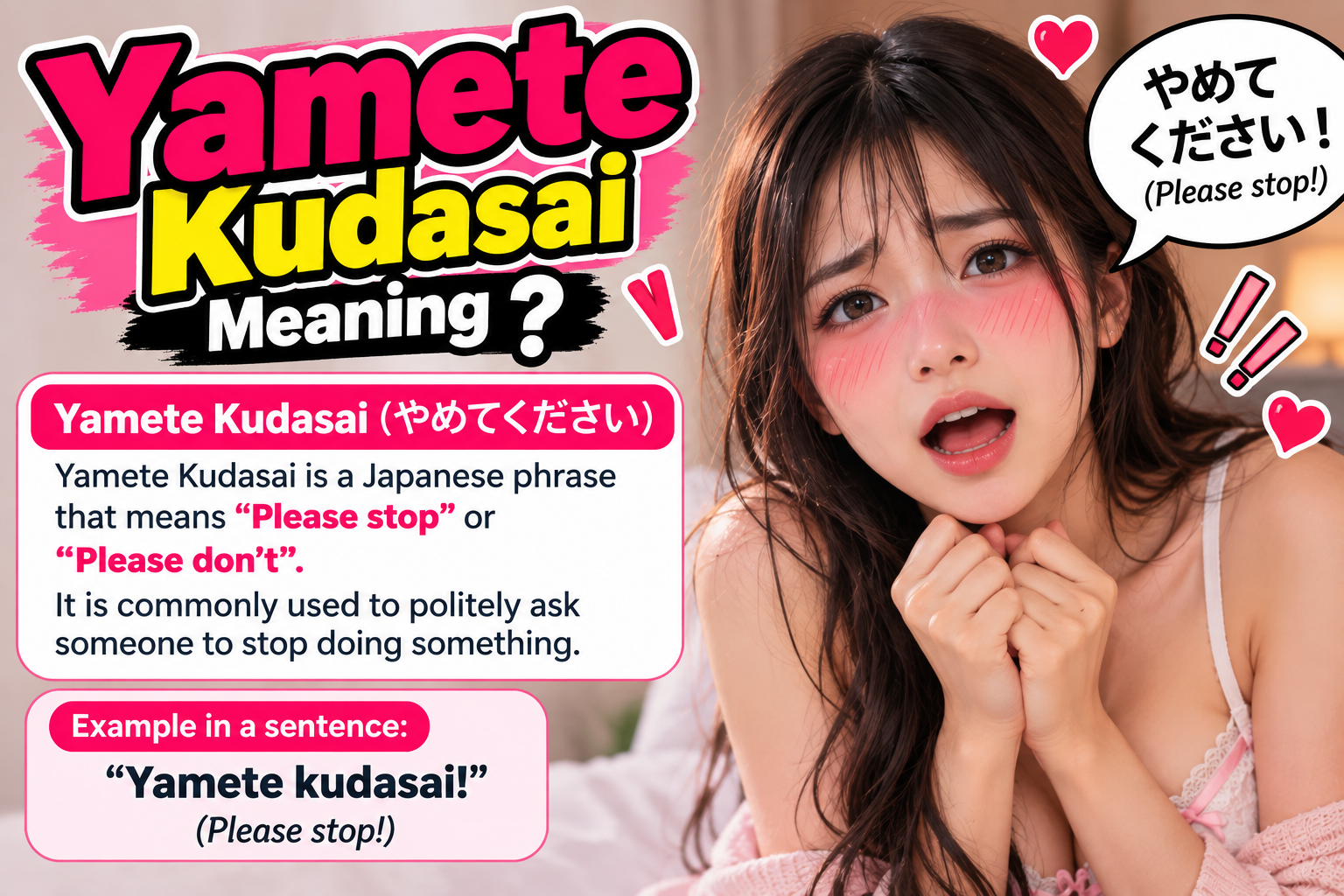
Yamete kudasai (やめてください) is a polite Japanese phrase that translates literally to “please stop” or “please desist.” It combines the verb yameru (to stop) with kudasai (a polite request marker) to create an explicit, courteous plea for someone to cease an action.
While rooted in daily polite Japanese conversation, the phrase underwent a massive viral transformation across internet subcultures. Western pop culture, anime communities, and TikTok memes frequently reference or exaggerate the phrase, often confusing learners who seek its authentic linguistic meaning versus its online slang usage. Understanding what does yamete kudasai mean requires separating formal daily communication from its modern internet meme status.
The Linguistic and Phonetic Breakdown of Yamete Kudasai
Japanese polite requests follow strict grammatical hierarchies based on social context, seniority, and intent. Understanding the phonetic components helps clarify why this specific phrasing carries the tone it does.
- Yamete (やめて): The conjunctive (te-form) of the verb yameru (止める / 辞める), meaning “to stop,” “to cease,” or “to quit.”
- Kudasai (ください): An auxiliary suffix derived from kudasaru (to give/bestow), used to turn an imperative action into a polite request equivalent to “please.”
Formality and Variation Spectrum
| Japanese Phrase | Romaji | Literal Translation | Social Tone / Context |
| やめて | Yamete | Stop it / Cut it out | Casual, informal; used with peers, children, or close friends. |
| やめてください | Yamete kudasai | Please stop | Polite standard; suitable for everyday polite boundary setting. |
| やめろ | Yamero | Stop (Command) | Rough, masculine imperative; firm command or sharp outburst. |
| おやめください | Oyame kudasai | Kindly refrain | Honorific / formal; used in official announcements or customer service. |
Why Is Yamete Kudasai So Famous Online?
The phrase’s internet ubiquity stems primarily from Japanese animation (anime) and vocal audio clips that circulated widely across media platforms.
Anime and Voice Acting Tropes
In anime, dramatic scenes—ranging from lighthearted teasing between characters to intense action battles—frequently utilize vocalized pleas. Dramatic voice acting (seiyuu) tends to emphasize emotional cadence, making phrases like yamete kudasai phonetically distinct and memorable to non-native listeners.
TikTok and Gaming Memes
Over time, short-form video platforms turned exaggerated audio clips of the phrase into viral soundbites. Content creators frequently overlay the audio onto comedic or awkward gameplay situations, creating an internet meme that detached the phrase from its original, standard Japanese usage.
Contextual Usage: When to Use (and Avoid) It
Context dictates everything in Japanese pragmatics. Using the right form prevents awkward misunderstandings in real-world scenarios.
- Daily Polite Situations: If someone accidentally steps on your foot, pushes past you, or continues an unwanted behavior in public, yamete kudasai is a natural, polite way to ask them to stop.
- Firm Boundaries: While polite, kudasai still carries a direct request. In serious or uncomfortable situations, stating yamete kudasai clearly establishes personal boundaries.
- Casual Conversations: Using yamete kudasai with close friends can sound overly formal or stiff; close acquaintances typically drop kudasai and simply say yamete!
- Professional Settings: In business environments, oyame kudasai or enryo kudasai (“please refrain”) is preferred over yamete kudasai to maintain high formal protocol (keigo).
Common Mistakes and Misconceptions
Here is where most non-native speakers and internet users get confused when interpreting the phrase:
- Assuming It Is Inherently Inappropriate: Internet meme culture often associates the phrase exclusively with adult media or suggestive content. In actual Japanese, it is a neutral, everyday polite request.
- Misinterpreting Tone: Adding kudasai makes the phrase polite, but tone of voice determines whether it sounds pleading, annoyed, or firm.
- Overusing Formal Suffixes with Close Friends: Speaking to intimate friends with kudasai can create unnatural emotional distance.
Strategic Validation: Understanding Real Meaning vs. Online Hype
Navigating Japanese cross-cultural terms requires recognizing the gap between authentic linguistic structure and digital pop culture framing.
Yamete Kudasai Meaning
From authentic Japanese grammar to internet & meme culture
🇯🇵 Authentic Japanese Grammar
Yamete + Kudasai is a polite way to ask someone to stop or not continue an action.
Yamete+Kudasai→“Please stop”
↓
🌐 Internet & Meme Culture
Online, the phrase is often used in dramatic audio clips, anime-related memes, jokes, and pop-culture references. These uses can be exaggerated and may differ from normal Japanese conversation.
↓
💬 Practical Reality
In everyday Japanese, the phrase can be used politely when asking someone to stop an action. Meme-style usage should be avoided in formal or professional conversations because the context may make it sound unusual.
Quick takeaway: The literal everyday meaning is a polite request to stop. Internet culture has given the phrase additional humorous and dramatic associations.
- Verify the Context: Determine whether you are analyzing a real-life conversation, anime dialogue, or an internet video meme.
- Check the Formality Level: Match your choice of yamete, yamete kudasai, or oyame kudasai to your relationship with the listener.
- Listen to the Delivery: Stress, pitch, and facial expression alter the phrase from a gentle plea to an urgent command.
Frequently Asked Questions
What is the difference between Yamete and Yamete Kudasai?
Yamete is the casual form used among friends, family, or children, meaning “stop it.” Yamete kudasai adds the polite marker kudasai, making it a courteous request suitable for strangers or everyday polite interactions.
Is Yamete Kudasai rude to say?
No, it is not inherently rude. It is a standard polite phrase. However, directly telling someone to stop an action can feel direct depending on your tone and the social setting.
How do you respond when someone says Yamete Kudasai?
The most natural response is to stop the action immediately and acknowledge it politely by saying Gomen nasai (“I’m sorry”) or Sumimasen (“Excuse me”).
The One Golden Rule
Never confuse internet meme tropes with native linguistic intent—always evaluate Japanese phrases by their authentic grammatical structure and real-world social context.
