


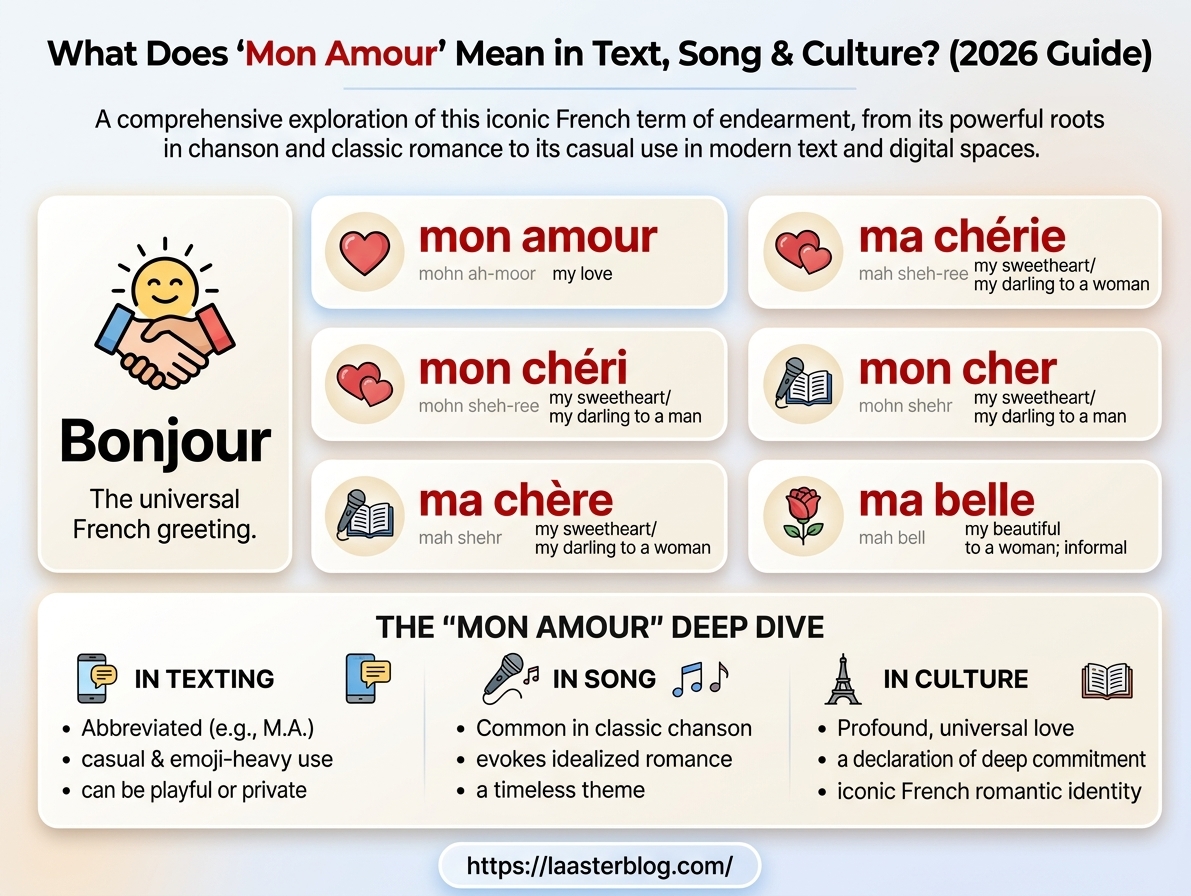
Mon amour literally translates from French to “my love” in English and serves as one of the world’s most recognizable terms of endearment. In modern texting, social media captions, and global music culture, it is used to address a romantic partner, a close friend, or a loved one with deep affection, elegance, and warm intimacy.
Introduction
In modern digital communication, French phrases carry a timeless, romantic aesthetic that transcends language barriers. Mon amour is arguably the crowning jewel of these expressions.
Whether you encounter it in viral TikTok audio trends, romantic WhatsApp texts, or pop song titles, understanding how to use and interpret mon amour ensures you capture the right vibe without any awkward linguistic missteps.
What Does Mon Amour Mean in Text & Chat?
In digital messaging and casual social chats, mon amour translates directly to “my love,” “my darling,” or “my sweetheart.” The tone varies based on the closeness of your relationship:
- Deep Romantic Affection: Used between lovers or spouses to express sincere, deep emotional intimacy.
- Playful & Stylish Endearment: Dropped into casual messages or social media comments among close friends to add a touch of drama, flair, or European sophistication.
- Aesthetic Captioning: Used in Instagram posts, Pinterest mood boards, and aesthetic TikToks to evoke romance, travel, or vintage elegance.
Straightforward, no confusion there. The core intent is always fondness, warmth, and affection—never hostility.
What Does Mon Amour Mean From a Guy vs. a Girl?
Here’s what most people miss: mon amour is grammatically gender-neutral when addressing someone. Because amour is a masculine noun in French, you say mon amour whether you are talking to a man or a woman.
When a Guy Texts “Mon Amour”
- To His Partner/Girlfriend: It carries a romantic, chivalrous, and tender tone. It indicates genuine adoration.
- To a Female Friend (Non-French speaker): Often used in a charming, flirtatious, or playful way.
- In Native French Culture: Reserved almost exclusively for romantic partners, spouses, or young children—rarely used casually with adult male friends.
When a Girl Texts “Mon Amour”
- To Her Partner/Boyfriend: Signals romantic closeness, sweetness, and emotional trust.
- To Her Best Friend (Platonic): Extremely common in modern online culture (especially on Instagram and Snapchat) as a hype phrase, similar to saying “my queen” or “babe.”
Quick Reference Table
| Term / Variant | Primary Meaning | Short Meaning | Common Tone | Suitable For | Not Suitable For |
| Mon Amour | My Love | My Love / Darling | Romantic, Warm, Stylish | Partners, close friends, aesthetic posts | Professional work emails, corporate Slack |
| Mon Amour Toujours | My Love Always | Forever Love | Deeply Romantic, Sincere | Anniversaries, deep texts | Casual acquaintances |
| Mon Amour de Ma Vie | Love of My Life | Soulmate | Passionate, Eternal | Proposals, long-term partners | First dates, casual texting |
Origin, History & Evolution
The phrase mon amour originates from Old French, built from the possessive pronoun mon (my) and the Latin root amor (love).
- Classical Literature & Romance: For centuries, French literature and poetry established mon amour as the ultimate declaration of affection worldwide.
- Global Pop Culture & Music: High-profile music releases—from classic chansons to modern afrobeat, pop, and French rap hits—have consistently pushed the term into global mainstream chart culture.
- Social Media & Aesthetic Trends: On platforms like TikTok and Instagram, mon amour evolved from a purely spoken French term into an international aesthetic keyword used for romantic edits, travel vlogs in Paris, and chic photo captions.
Usage Across Social Media Platforms
- WhatsApp & iMessage: Used as an intimate text sign-off, morning greeting, or affectionate reply to a partner.
- Instagram: Dominates romantic post captions, anniversary photo dumps, and comments on best friends’ photos.
- TikTok: Used heavily in video text overlays, romantic storytime trends, and background audio titles.
- Snapchat: Sent in cozy, everyday snaps to show affection to a partner or close friend group.
Real Chat Examples & Real-World Scenarios
Scenario 1: Romantic Morning Text (iMessage)
Partner A: Good morning! Hope you slept well.
Partner B: Good morning, mon amour! Can’t wait to see you tonight. ❤️
Scenario 2: Best Friend Hype Comment (Instagram)
Friend A: [Posts outfit photo]
Friend B: Absolutely stunning, mon amour! 🔥😍
Scenario 3: Reassuring a Partner (WhatsApp)
Partner A: I’m having such a stressful day at work.
Partner B: Take a deep breath. You’ve got this, mon amour. See you soon.
Common Confusions, Mistakes & Wrong Interpretations
Avoid these common slip-ups when using or interpreting mon amour:
- The Gender Mistake (“Ma Amour”): People often mistakenly think they should use ma for women. “Ma amour” is grammatically incorrect because French avoids putting two vowel sounds together (ma + amour). It is always mon amour, regardless of the recipient’s gender.
- Over-using in Professional Settings: Dropping mon amour into a business environment or work chat can lead to HR complications or genuine awkwardness. Keep it strictly personal.
- Assuming Instant Romance: In international online circles, friends frequently drop mon amour casually. Don’t immediately assume someone is confessing their undying romantic love if they use it in a friendly social media comment.
Similar Terms, Alternatives & Cleaner Substitutes
French Alternatives
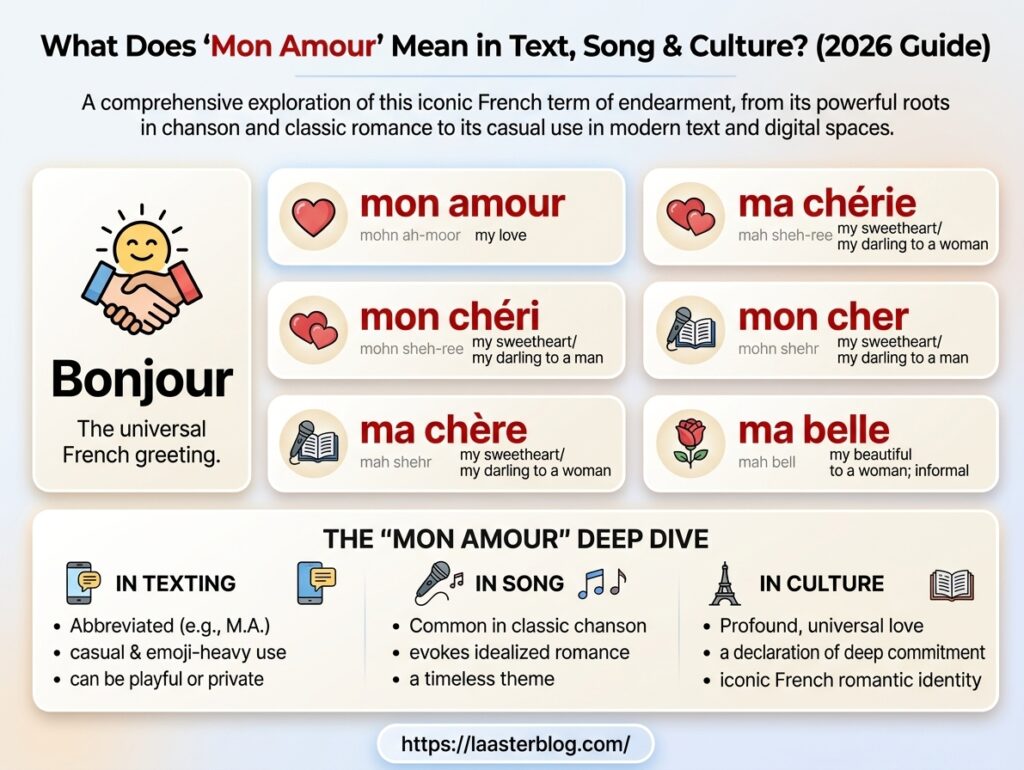
- Mon Chéri (m) / Ma Chérie (f): My darling / my sweetheart.
- Mon Cœur: My heart.
- Mon Trésor: My treasure.
- Mon Ange: My angel.
English & Global Substitutes
- My Love: Clean, timeless English equivalent.
- Babe / Darling: Casual everyday terms of endearment.
- Mi Amor: The Spanish equivalent, widely used in Latin culture and digital slang.
How to Reply When Someone Uses Mon Amour
Match the energy and context of the sender using these quick options:
Romantic & Heartfelt Replies
- “Love you too, mon chéri / ma chérie.”
- “You make my day, my love.”
- “Toujours, mon amour.” (Always, my love.)
Playful & Casual Replies
- “Aww, thanks darling! ❤️”
- “Right back at you! 😘”
- “You’re the sweetest.”
Is Mon Amour Still Popular in 2026?
Absolument. Mon amour remains one of the most resilient, timeless terms in human communication. While internet slang acronyms come and go with shifting algorithm trends, mon amour maintains an unbeatable status as a global symbol of romance, elegance, and affectionate warmth across all social platforms.
