


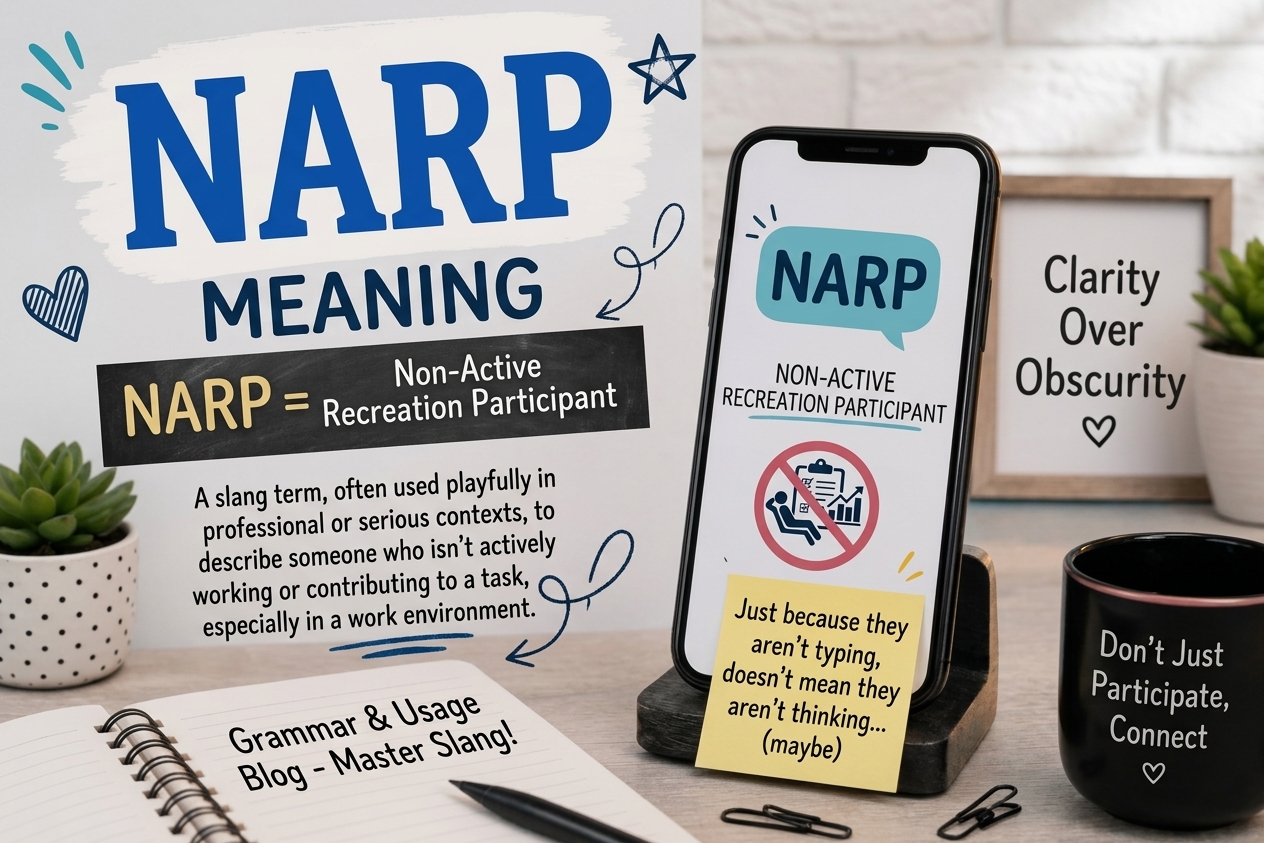
NARP stands for “Non-Athletic Regular Person.” It is a popular slang term used in high school, college, and sports culture to describe non-athletes or everyday students who do not play on an organized varsity or collegiate sports team.
While the literal definition is simple, the word carries distinct cultural weight depending on who is using it. If you have stumbled across it on social media, in a dorm room, or on campus, here is the full breakdown of what NARP really means and how it functions in real life.
Core Meaning and Primary Contexts
At its core, NARP is an acronym built around a stark contrast in college life: student-athletes versus everyone else.
NARP = Non-Athletic Regular Person
The term emerged organically within student-athlete subcultures to categorize the rest of the campus population. However, it isn’t strictly reserved for athletes talking down to non-athletes; non-athletes routinely use it self-referentially or as a lighthearted joke.
Here is how the acronym breaks down in everyday conversation:
- Non-Athletic: Does not hold a spot on an official athletic roster, participate in mandatory morning lifts, or follow a collegiate team schedule.
- Regular Person: A standard student whose daily life revolves around academics, clubs, social activities, and personal leisure rather than structured training schedules.
Example Sentences in Conversation
- “I skipped the 6 AM workout phase of my life and embraced being a full-time NARP.”
- “The varsity weight room is closed during peak hours so the NARPs can’t hog the squat racks.”
- “She traded her division-one soccer scholarship to live a regular NARP lifestyle and study abroad.”
Real-World Usage: How People Actually Use “NARP”
Dictionary definitions treat “NARP” as a neutral classification, but in real life, context completely changes its tone.
| Context / Audience | Tone | Real-World Application |
| Student-Athletes | Casual / Slightly Tribal | Used to differentiate their high-stress, regimented lifestyle from students with unstructured free time. |
| Self-Referential | Humor / Self-Deprecating | Non-athletes using the label to poke fun at their own lack of athletic ambition or fitness routine. |
| Fitness Culture | Playful Banter | Differentiating casual gym-goers from powerlifters, bodybuilders, or competitive athletes. |
| Ex-Athletes | Nostalgic | Former collegiate or high school athletes transitioning into civilian/corporate life. |
That’s not a glitch—it’s a cultural shift. On many college campuses, being a “NARP” simply means enjoying weekends without a game schedule, sleeping in past 5:00 AM, and participating in general campus life.
Secondary Meanings and Acronym Overlaps
Here’s what most people miss: NARP isn’t exclusively a college sports slang term. Depending on the field, industry, or region, the acronym can mean entirely different things.
If you are reading technical documents, medical journals, or regional reports, you might be looking at one of these alternative definitions:
1. Medical & Genetics: Neuropathy, Ataxia, and Retinitis Pigmentosa
In clinical settings, NARP syndrome is a rare genetic condition caused by mutations in mitochondrial DNA. It affects the nervous system, leading to sensory neuropathy (numbness), ataxia (muscle weakness and coordination loss), and retinitis pigmentosa (progressive vision loss).
2. Real Estate & Industry: National Association of Residential Professionals
In business, NARP often refers to professional trade organizations, such as the National Association of Residential Professionals or the former name of the Rail Passengers Association (formerly the National Association of Railroad Passengers).
3. Regional Slang & Local Nuances
In certain niche communities or online forums, NARP is occasionally used as shorthand for specific internal project names, regional policy acronyms, or local slang. Context always dictates the meaning.
Common Mistakes and Confusions to Avoid
Straightforward as it seems, people frequently misuse or misinterpret “NARP.” Avoid these common traps:
- Assuming It Is Always Insulting: While it can be used condescendingly by student-athletes, it is far more frequently used as self-deprecating banter by regular students. Context and vocal tone determine whether it is an insult or a joke.
- Confusing Intramural Athletes with Varsity Athletes: Playing casual intramural flag football or club ultimate frisbee generally does not clear the bar for “athlete status” in this context—club players are often affectionately lumped into the NARP category by varsity players.
- Mixing Up Medical and Slang Contexts: If you see “NARP” in a medical record or scientific study, it has zero connection to campus life or sports; it refers to Neuropathy, Ataxia, and Retinitis Pigmentosa.

Quick Entity Summary & Comparison Table
To quickly identify which meaning of NARP fits your specific context, use this reference guide:
| Field | Full Term | Target Audience | Primary Setting |
| Pop Culture / Slang | Non-Athletic Regular Person | Students, Athletes, Gen-Z | TikTok, College Campuses, High Schools |
| Medicine / Genetics | Neuropathy, Ataxia, & Retinitis Pigmentosa | Physicians, Patients, Researchers | Hospitals, Genetics Labs, Clinical Papers |
| Transportation | National Association of Railroad Passengers | Commuters, Policy Makers, Advocacy | Transit Legislation, Infrastructure |
The One Rule to Remember “NARP”
If you encounter the word in everyday conversation, social media, or youth culture, remember this single rule:
If it’s spoken on campus or posted on TikTok, it means “Non-Athletic Regular Person”—if it’s written in a hospital report, it’s a genetic condition.
